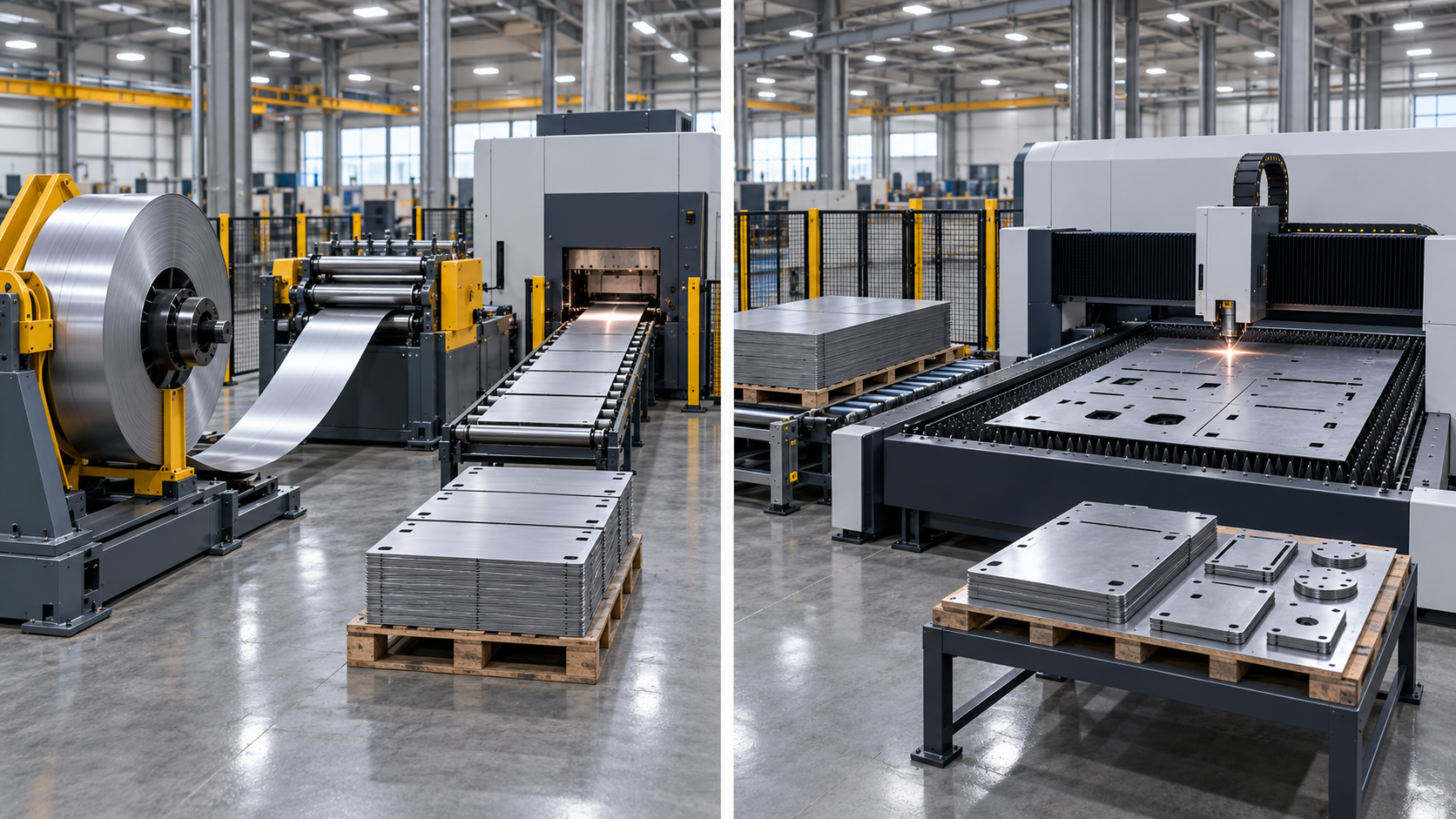
Choosing between coil-fed and sheet-fed cutting is not simply a question of material format. It affects how material moves through production, how often jobs can change, how efficiently material is used, and how easily the process can be automated.
Coil-fed cutting is built around continuous material flow and longer production runs. Sheet-fed cutting provides greater flexibility when materials, thicknesses, geometries, and batch sizes change frequently.
Both approaches can use fiber laser technology and both can be highly automated. The main difference lies in how the material reaches the cutting process and what happens before and after cutting.
The right choice depends on production volume, product mix, material requirements, and the level of flexibility your operation needs.
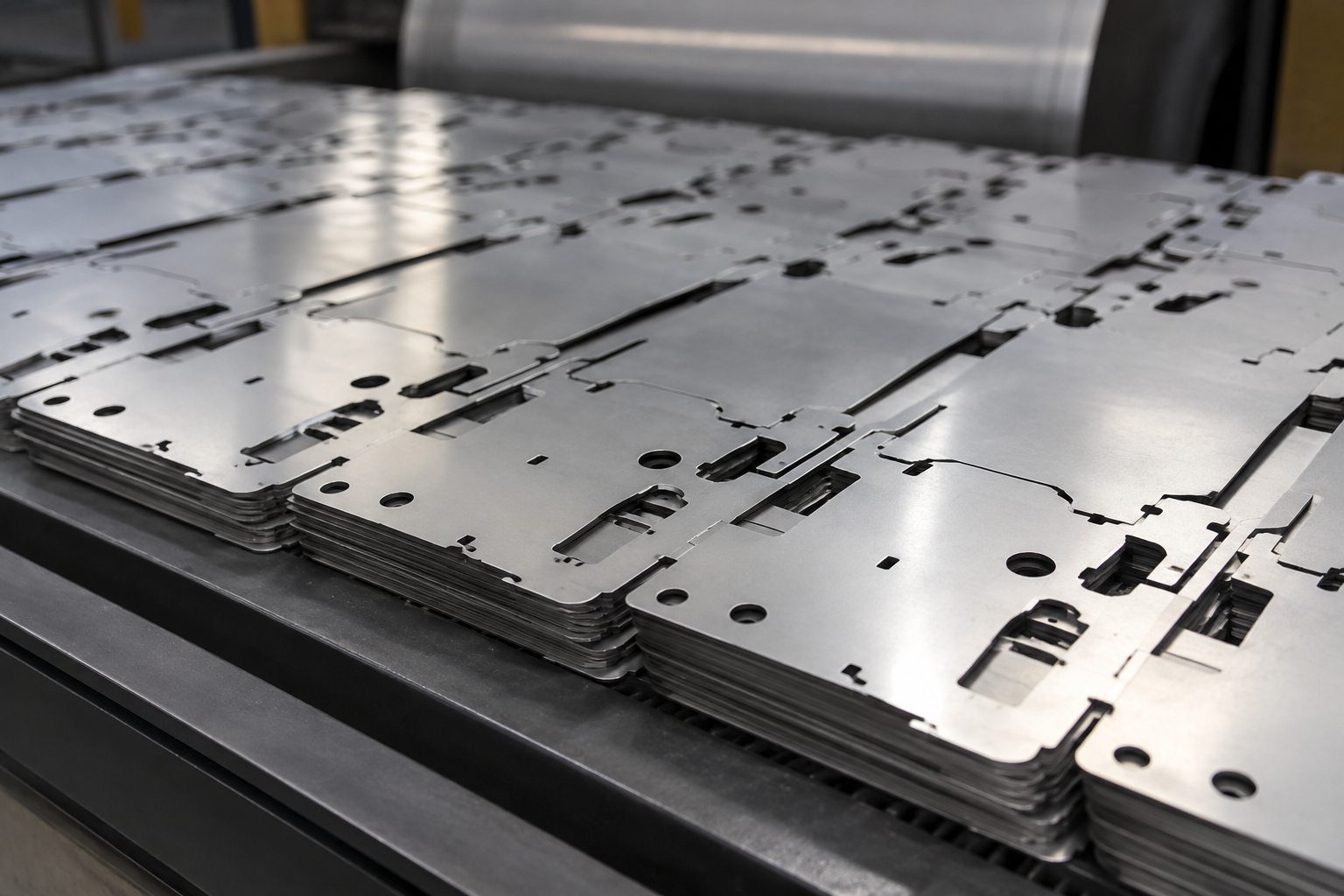
Coil cutting processes metal directly from a coil instead of from individual pre-cut sheets.
In a typical coil-fed system, the material is unwound from a decoiler, straightened or leveled, fed into the processing area, and then cut into finished parts or blanks. Depending on the system, cutting can be combined with punching, forming, stacking, or other downstream operations.
The defining characteristic is continuous material supply. Instead of stopping after each sheet, the line can continue processing material from the coil until the production run ends or the coil needs to be changed.
This makes coil cutting particularly suitable for repetitive production where large quantities of parts are made from the same or similar material.
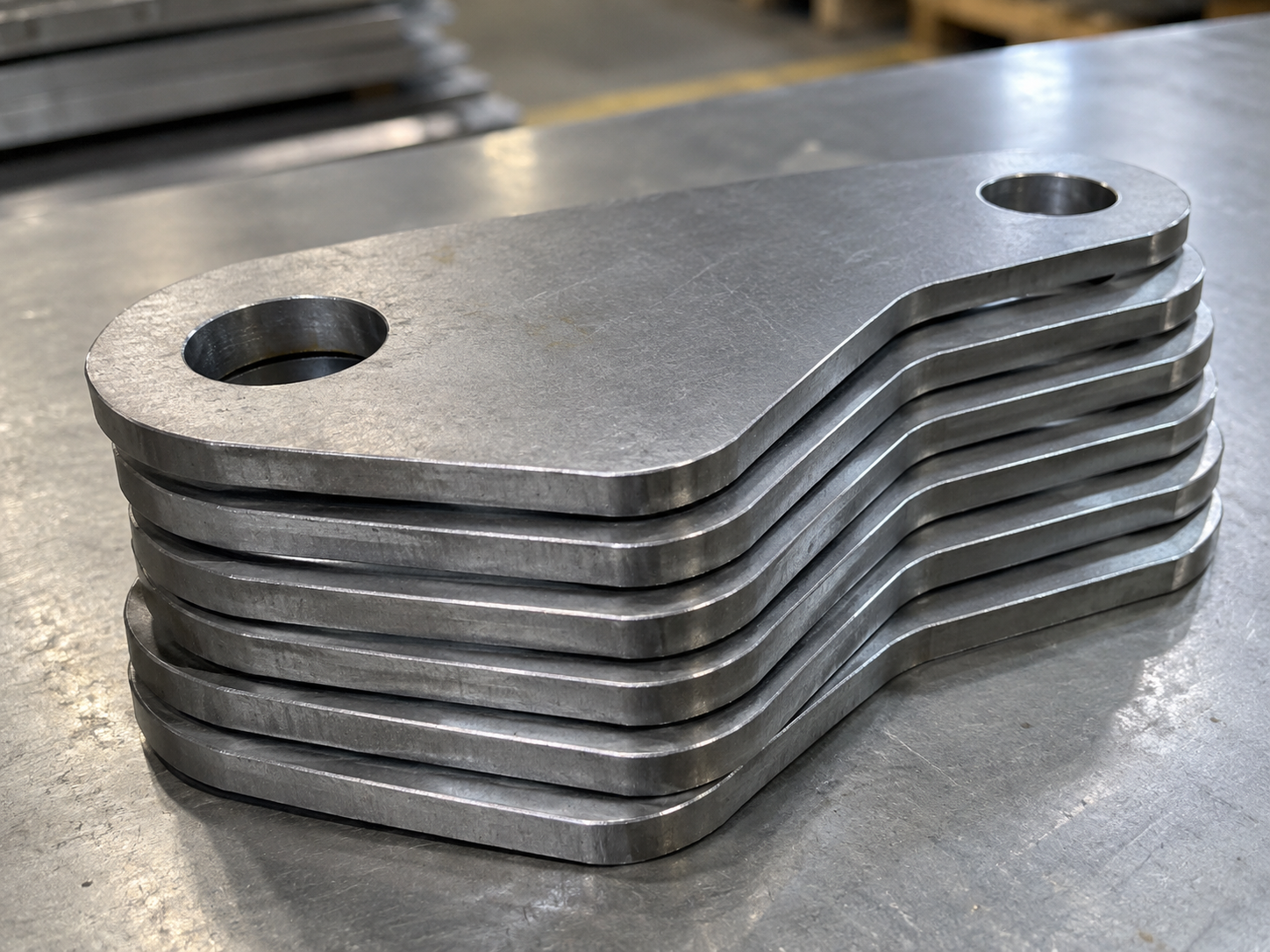
Sheet-fed cutting starts with individual flat sheets in predefined dimensions.
Each sheet is loaded onto the cutting machine, nested parts are processed, and the sheet is then unloaded or exchanged for the next one. This cycle can be manual or highly automated with pallet changers, loading systems, storage towers, and sorting equipment.
Because each sheet is a separate material unit, manufacturers can move relatively easily between different grades, thicknesses, formats, and jobs.
This is one reason sheet-fed fiber laser cutting is widely used in job shops and production environments with a high mix of parts.
The simplest way to understand the two approaches is this:
With coil-fed production, a long strip of material moves through an integrated line. There is no need to exchange a sheet every few metres, which can reduce interruptions during longer production runs.
Sheet-fed production retains those individual material changes, but that also makes it easier to switch from one job to another.
This does not mean that coil-fed laser cutting is limited to simple geometries. A fiber laser can still produce complex contours and different parts from a coil. The main limitation appears when the production schedule requires frequent changes of material type, thickness, or coil width.
Sheet-fed systems are generally better suited to that kind of variability.
Material utilization is one of the main reasons manufacturers consider coil-fed production.
With conventional sheets, nesting is always constrained by the dimensions of the sheet. Every sheet has a defined beginning and end, and the nesting software has to arrange parts within those boundaries.
Coil-fed production removes the repeated sheet-length boundary. Parts can be nested along a continuous strip, which can give the nesting system more freedom to use the available material efficiently.
That does not mean coil cutting eliminates scrap. Coil width, part geometry, nesting strategy, and production mix still determine how much material is actually used.
The advantage is that the process can reduce some of the restrictions created by fixed sheet sizes. For high-volume production of suitable parts, this can translate into lower material consumption per finished part.
The original draft correctly identifies material utilization as an advantage of coil processing, but the claim that it “eliminates sheet edge scrap” is too absolute.
Coil-fed systems are designed around continuous production.
Because material is supplied directly from the coil, repeated sheet loading and pallet changes are removed from the normal production cycle. Decoiling, leveling, feeding, cutting, and downstream handling can be integrated into one automated line.
The productivity advantage does not necessarily come from a faster cutting process. If both systems use comparable fiber laser technology, the laser itself may perform similarly.
The difference is in non-cutting time.
A coil-fed line can keep supplying material without waiting for another sheet to enter the machine. This becomes increasingly valuable in longer production runs.
Sheet-fed cutting can also achieve a very high level of automation. Modern systems can combine automated storage, loading, unloading, sorting, and software-controlled production. Describing sheet-fed automation as merely “moderate to high,” as in the original comparison, therefore understates what current systems can do.
The difference is better described as continuous inline automation versus flexible sheet-based automation.
This is usually where sheet-fed cutting has the stronger advantage.
Changing from one sheet material or thickness to another can be relatively straightforward, especially when the machine is connected to automated storage.
That flexibility is useful when the production schedule contains many different orders, small batches, prototypes, or customer-specific parts.
Coil-fed production works best when a significant amount of work can be processed from the same coil specification. Changing coil width, thickness, or material grade usually requires more preparation than selecting another sheet.
The original draft therefore points in the right direction when it describes sheet cutting as particularly suitable for high-mix production and frequent changeovers.
The distinction is less about what shapes the machine can cut and more about how easily the whole production system can switch from one material requirement to another.
The economics of coil-fed and sheet-fed production should be evaluated at the level of the complete process.
A coil-fed line requires additional equipment for coil handling, straightening, leveling, and feeding. The initial system is therefore generally more complex than a standalone sheet-cutting machine.
That additional investment can make economic sense when the production volume is high enough to benefit from continuous material flow, reduced handling, fewer interruptions, and improved material utilization.
Sheet-fed production has a different cost structure. It can start with a simpler machine configuration and be expanded with storage and automation as production requirements increase.
Its flexibility can also have economic value. If a manufacturer regularly changes materials, thicknesses, and batch sizes, avoiding long changeovers and dedicated coil inventory can be more important than maximizing continuous production time.
For this reason, neither process has an automatically lower cost per part.
The correct comparison should use the manufacturer’s actual parts, materials, production volumes, changeover frequency, labor requirements, and expected machine utilization.
| Factor | Coil-fed cutting | Sheet-fed cutting |
|---|---|---|
| Production mode | Continuous | Sheet-by-sheet |
| Best suited to | Longer, repetitive runs | Mixed production |
| Material utilization | Very high with suitable nesting | High, but limited by sheet size |
| Material changes | More involved | Relatively fast |
| Geometry flexibility | High | High |
| Automation potential | Very high | Very high |
| System complexity | Higher | More scalable |
| Main advantage | Continuous production flow | Production flexibility |
Choose coil-fed cutting when your production contains large quantities of recurring parts made from a relatively stable range of materials.
Typical applications can include automotive components, HVAC products, appliances, construction components, and other standardized parts produced in significant volumes. These are also the sectors identified in the original draft as strong candidates for coil processing.
In practical terms, coil cutting answers one production question:
How efficiently can we turn a continuous supply of material into finished parts?
Choose sheet-fed cutting when production variety is more important.
It is generally better suited to job shops, contract manufacturers, customized equipment, prototypes, and production environments where materials, thicknesses, geometries, and batch sizes change regularly.
Sheet cutting answers a different question:
How efficiently can we move from one job to the next?
Some manufacturers may benefit from both. Coil-fed production can handle recurring high-volume components, while sheet-fed machines remain available for variable, custom, or lower-volume work.
Coil-fed and sheet-fed cutting can use the same cutting technology, but they organize production differently.
Coil-fed cutting is built around continuity. It can reduce repeated material changes, support long automated production runs, and provide more freedom for nesting along the length of the material.
Sheet-fed cutting is built around flexibility. It allows manufacturers to move quickly between different materials, thicknesses, formats, and production orders.
For stable, repetitive production, coil-fed processing can provide a more efficient material flow. For high-mix manufacturing and frequent job changes, sheet-fed cutting is usually the more flexible approach.
The decision should therefore not start with whether a part can be cut from a coil or a sheet.
It should start with how that part needs to move through your production process.


