1. Stable high-power operation
Designed to maintain stable operating conditions as laser power increases.
The eVa 11-UHP is a new cutting head developed for laser powers from 20 to 60 kW. Its redesigned optical system, mechanical architecture and thermal management address the higher energy density and extreme thermal loads of ultra-high-power cutting, making this power usable in a stable, predictable and repeatable process.

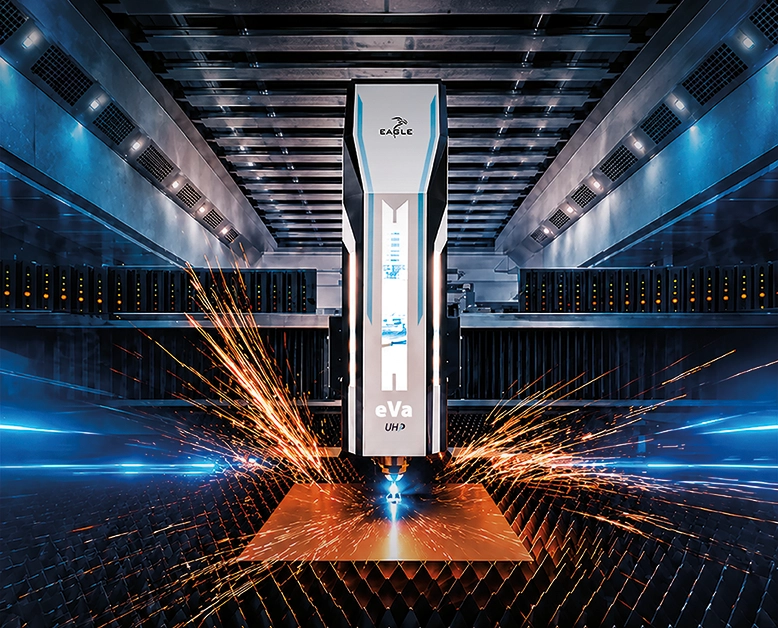
Increasing laser power increases the amount of energy passing through the cutting head. That places greater demands on the optics, mechanical structure and thermal management.
The eVa 11-UHP was developed around these conditions. Its redesigned optical system manages energy distribution across the optical components, while a new cooling concept controls heat throughout the beam path.
Together, these systems help maintain stable optical conditions as laser power increases.

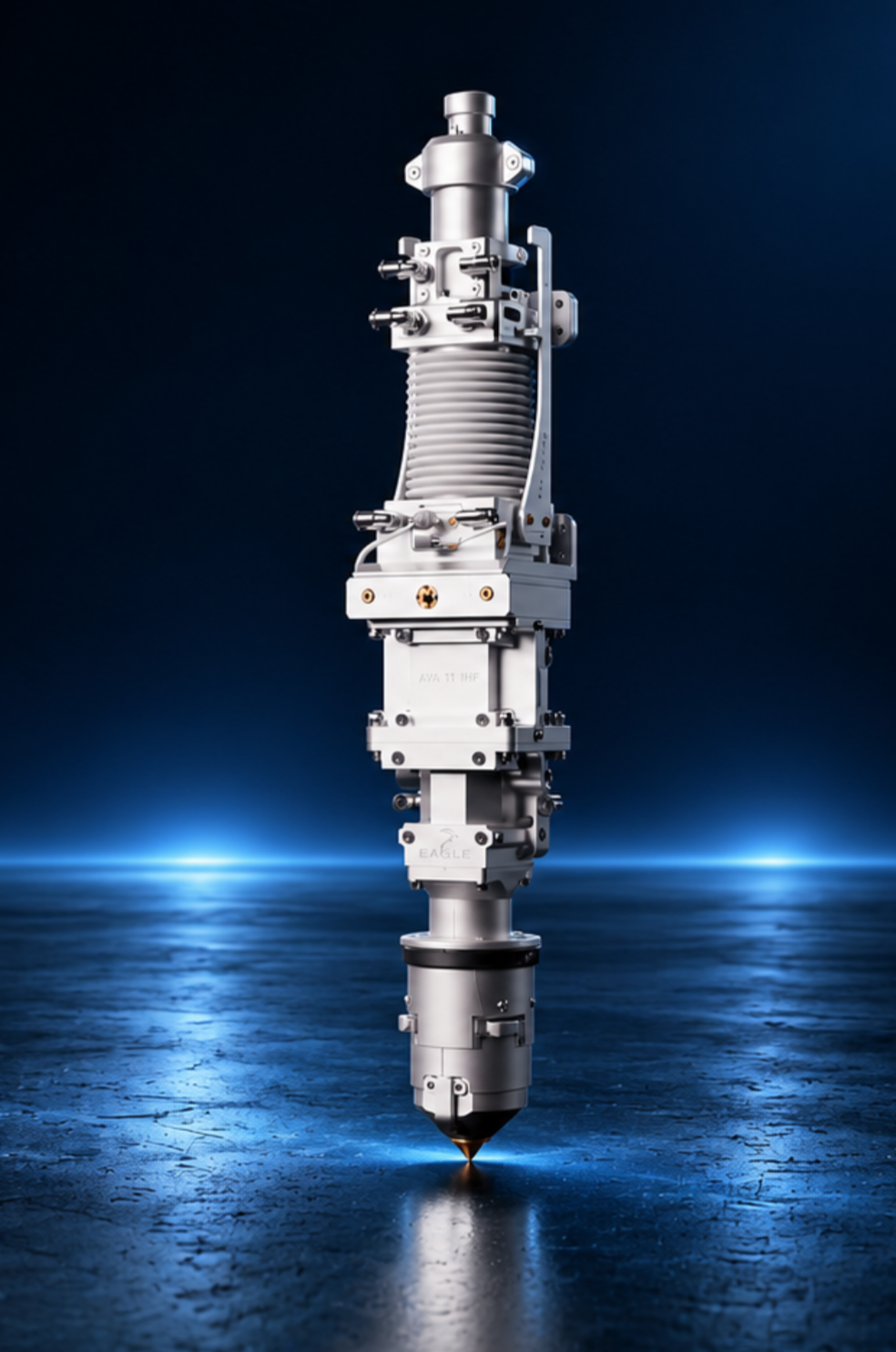
A new mechanical design accommodates the UHP optical system and its specific lens geometry.
The optical design distributes energy differently across the system to reduce the load on individual optical components
Dedicated cooling throughout the beam path helps control the thermal environment inside the head
A separate cooling system helps maintain sensor stability under high-power conditions.
A revised blow-off design with an interchangeable nozzle is optimized for thick-material cutting.
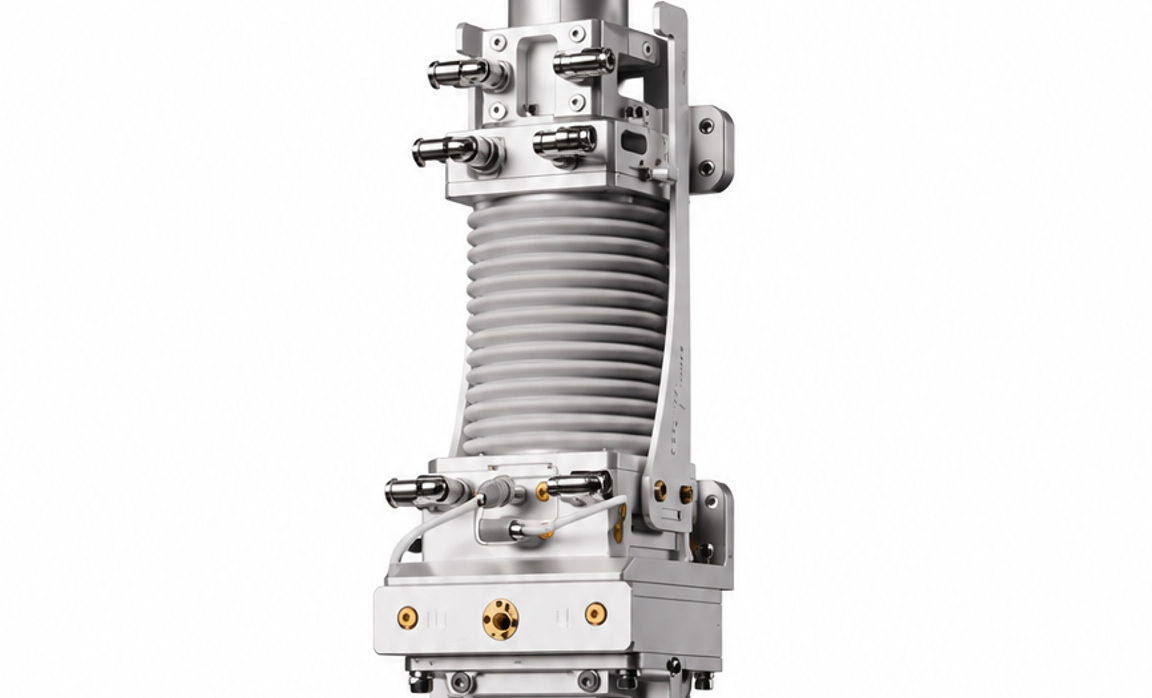
The eVa 11-UHP uses a redesigned optical architecture developed specifically for ultra-high-power operation.
A new optical geometry and numerical aperture improve beam focus, focal spot control and energy distribution. Lower energy density on individual optical components helps reduce thermal load and supports beam stability at high power.
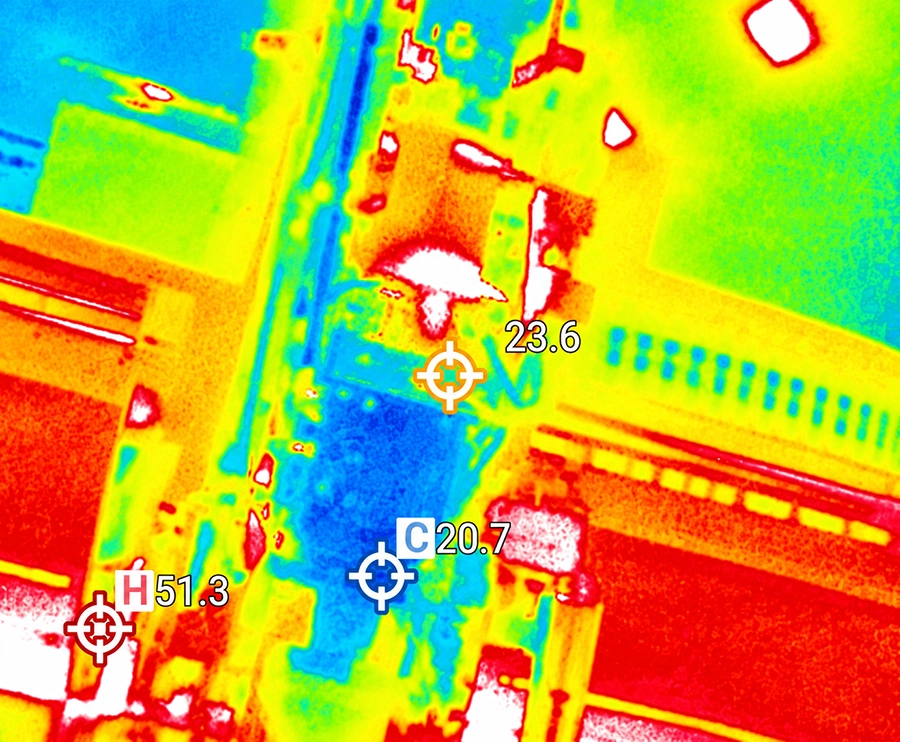
At 20–60 kW, controlling heat becomes part of controlling the cutting process. The eVa 11-UHP introduces dedicated cooling along the beam path. Each module has its own cooling system, while the mechanical design and materials support efficient heat dissipation.
This helps maintain a more stable thermal environment inside the cutting head during high-power operation.
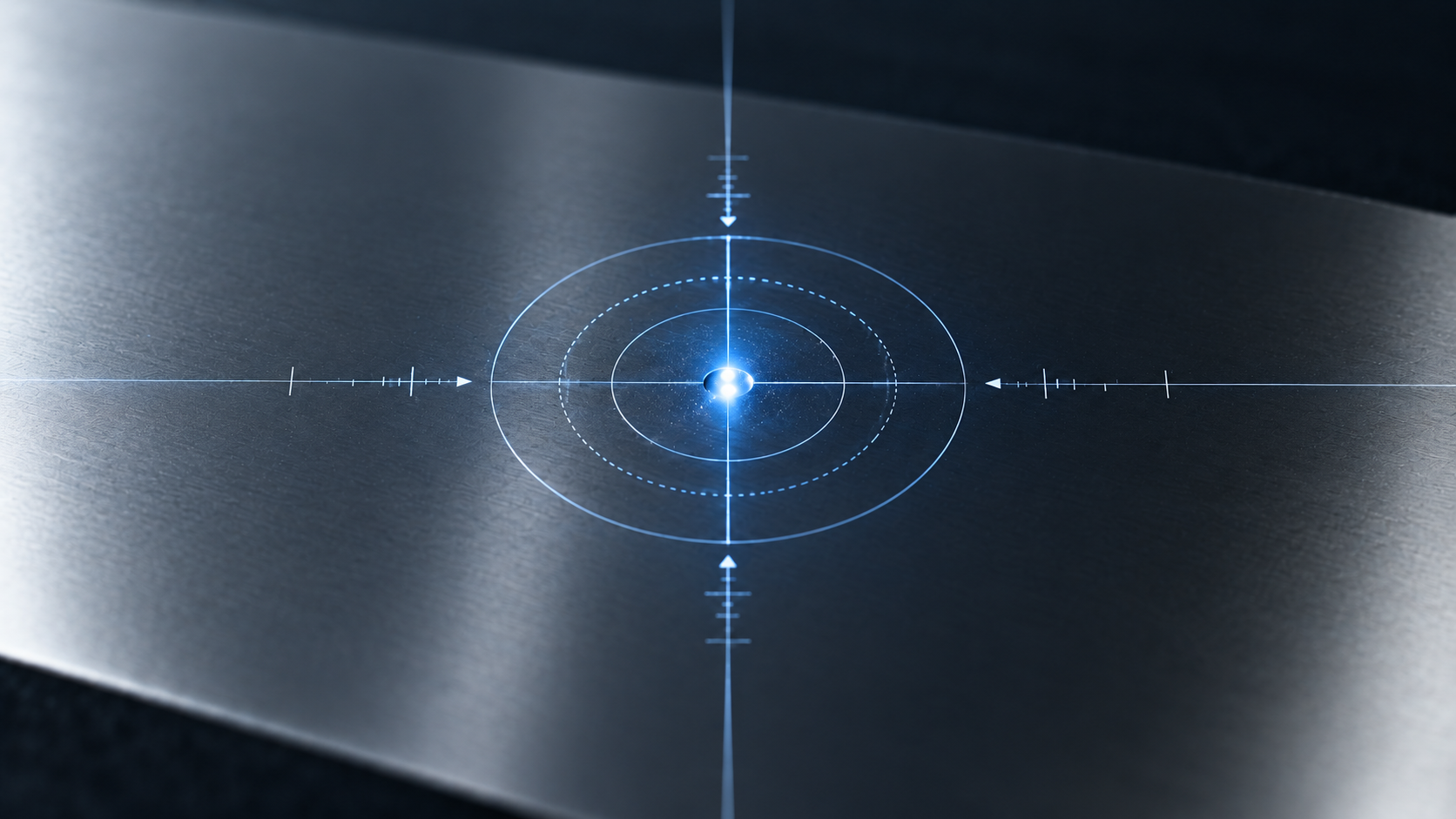
Thermal changes can affect the position of the beam and therefore the cutting process. The eVa 11-UHP’s optical layout is designed to reduce thermally induced focus shift. A separately cooled distance sensor further helps maintain stable measurement conditions under ultra-high-power operation.
The result is a more predictable and repeatable cutting process, particularly during prolonged high-power operation.
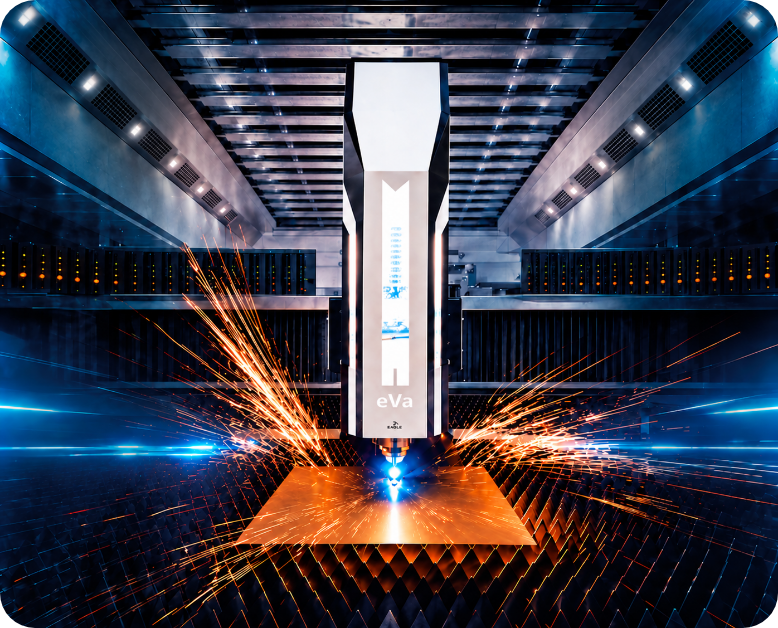
Ultra high powers are only useful if the system can control and use it.
The eVa 11-UHP was developed around this principle.
Rather than simply adapting an existing cutting head to higher laser power, Eagle redesigned the optical system, mechanical architecture and thermal management around the requirements of ultra-high-power operation.
The goal is not simply to handle more energy. It is to maintain the conditions needed to turn that energy into stable, predictable cutting performance.
BOOK A SHOWROOM VISIT
BOOK A SHOWROOM VISITDesigned to maintain stable operating conditions as laser power increases.
Reduced thermally induced focus shift supports repeatable cutting during prolonged operation.
Dedicated cooling and optimized energy distribution help manage the thermal conditions inside the cutting head.
Designed for applications requiring laser powers from 20 to 60 kW.
The eVa 11-UHP is a cutting head developed specifically for ultra-high-power laser cutting from 20 to 60 kW.
It combines a redesigned optical system, new mechanical architecture and advanced thermal management developed around the requirements of ultra-high-power operation.
Higher laser power creates greater energy density and thermal loads within the optical system. The eVa 11-UHP manages energy distribution across the optics to reduce the load on individual components and support beam stability.
Each module along the beam path has its own cooling system. The architecture is designed to improve heat extraction and maintain more stable thermal conditions.
Its optical layout is designed to reduce thermally induced focus shift. The distance sensor also has a dedicated cooling system to help maintain stable measurement conditions.
The eVa 11-UHP is designed for laser powers from 20 to 60 kW.
At 60 kW, the cutting head must manage much higher optical and thermal loads than at conventional laser powers. The eVa 11-UHP is designed to control these conditions through redesigned optics, lower energy density in critical areas and cooling throughout the beam path.
The optical system, mechanical architecture and thermal management were developed specifically for ultra-high-power operation. Cooling along the entire beam path and improved control of energy distribution help maintain stable beam conditions, focal position and sensor operation at powers up to 60 kW.
Yes. Higher laser power increases the thermal load within the optical system. The eVa 11-UHP reduces energy density in critical areas and uses dedicated cooling to limit thermal stress and maintain optical stability.
The redesigned optical system reduces energy density, while cooling is provided throughout the beam path. The increased distance between the fiber output and collimating lens reduces energy density in that area by 2×, helping reduce thermal load on the optical system.
Not necessarily. The eVa 11-UHP is designed to reduce the effects that normally increase maintenance at ultra-high power. Lower energy density, dedicated cooling and greater separation between the cutting zone and protective glass help reduce contamination, thermal load and the frequency of protective-glass replacement.
Yes. The eVa 11-UHP is designed for laser sources from 20 to 60 kW, so the same head architecture supports the broader ultra-high-power range rather than being dedicated only to 60 kW.
At ultra-high power, heat can affect the optical system, focal position and sensor operation. Better thermal control reduces these effects and supports more predictable and repeatable cutting during demanding high-power operation.