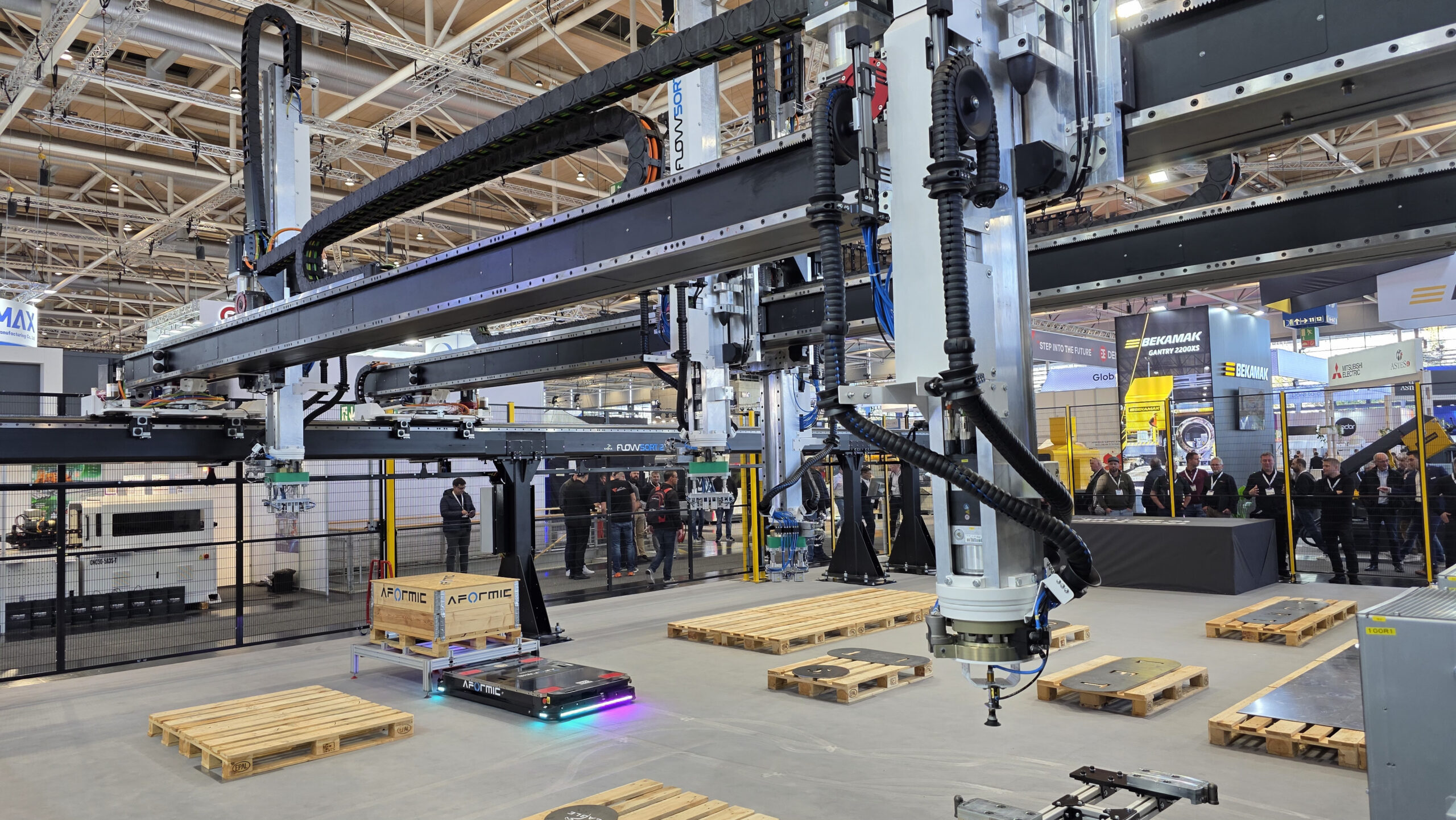
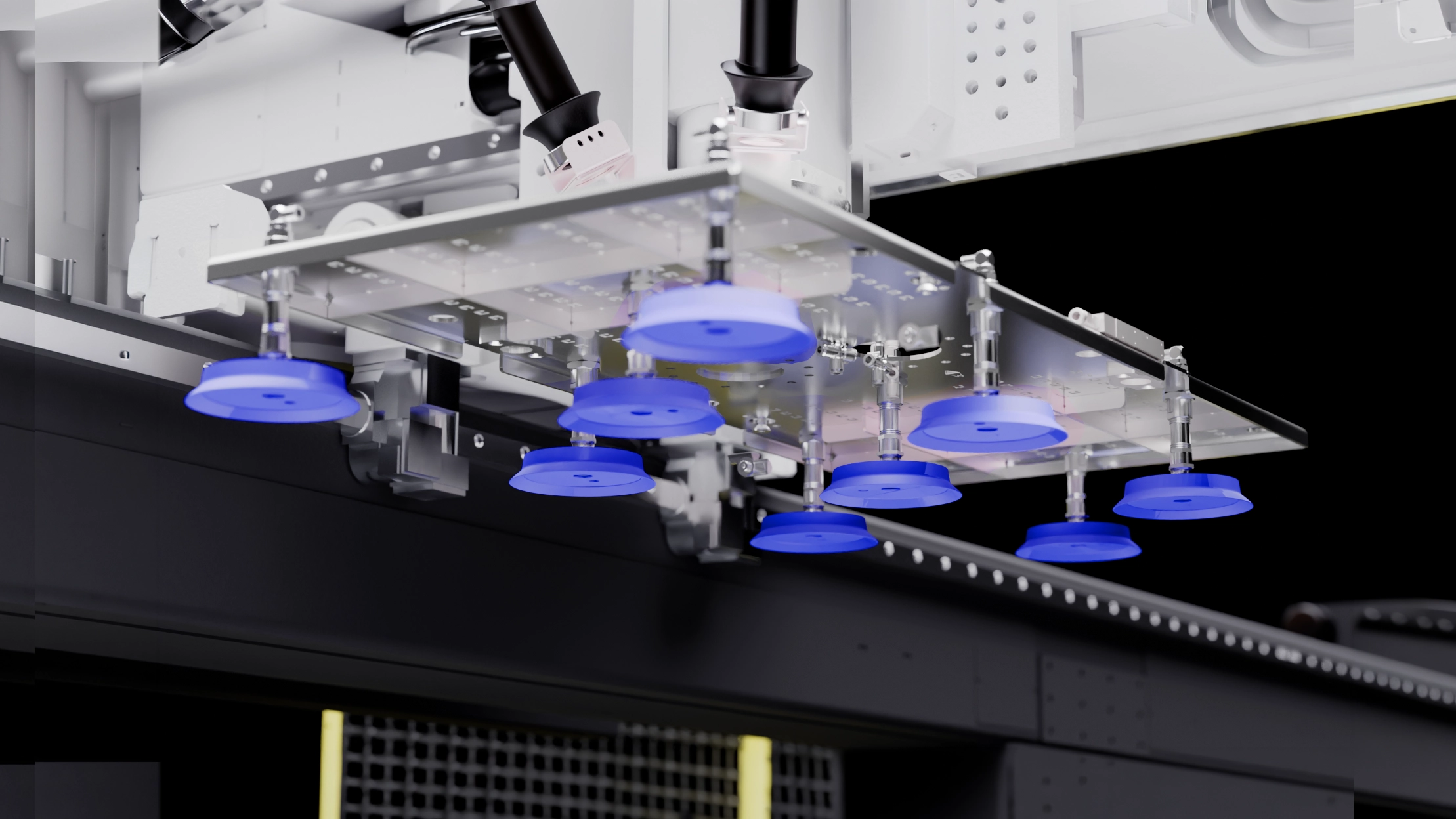
There’s a particular kind of optimism that comes with installing a material storage tower. Eight hours of production while everybody sleeps. No overtime, no third shift, a respectable pile of finished parts waiting in the morning.
Sometimes that’s exactly what happens. Other times, the machine has been sitting idle since 11:47 PM because a small bracket tipped up and caught the nozzle.
The tower, incidentally, worked perfectly.
Unattended laser cutting is often discussed as a material handling problem. Get the sheets onto the machine, get them off again, repeat. But preparing a machine for eight hours of production and actually getting eight hours of production out of it are two different things.
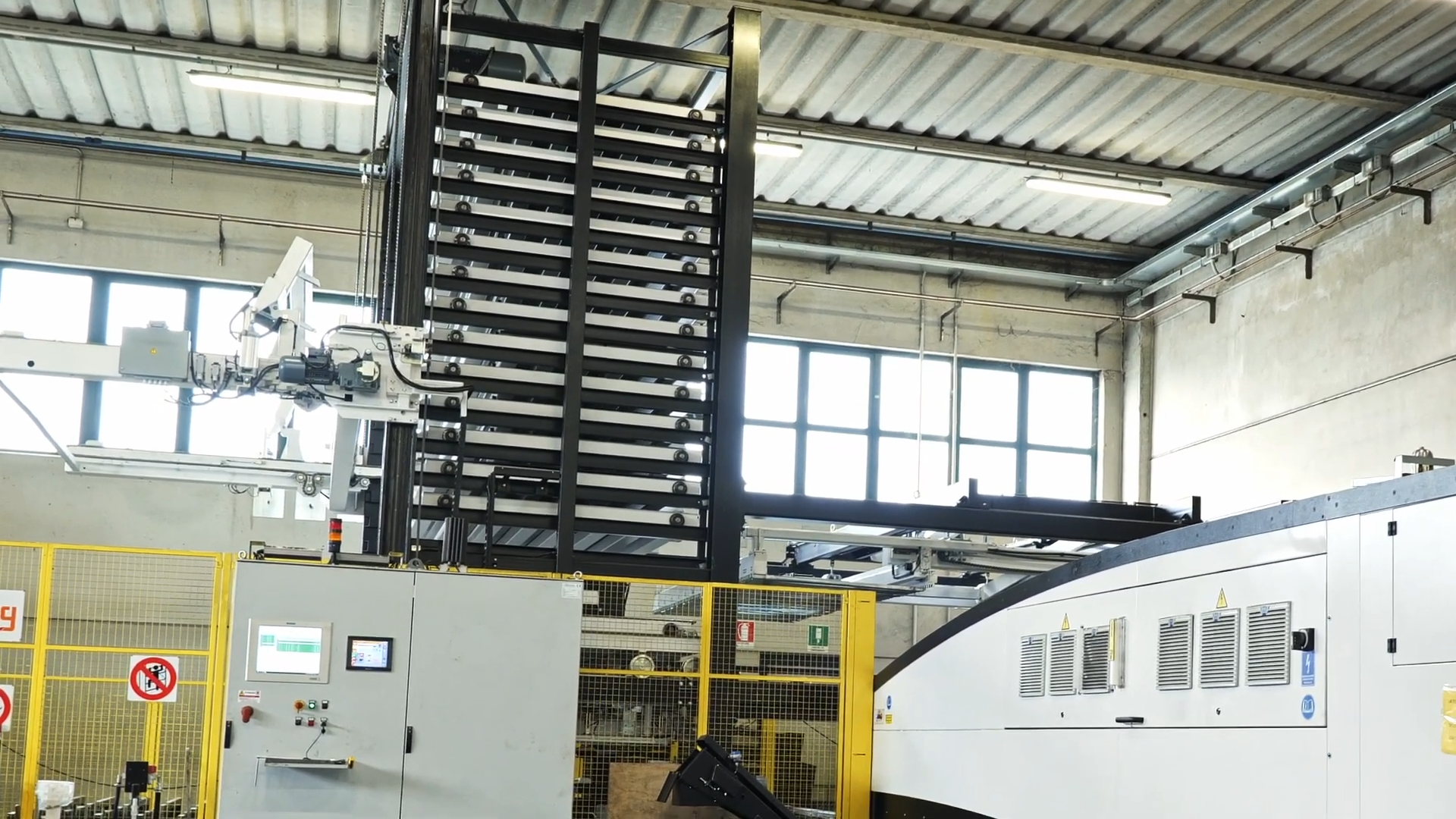
Unattended laser cutting, also known as lights-out laser cutting, requires automated material handling, reliable cutting parameters, suitable nesting strategies, sufficient consumables and appropriate monitoring and safety systems.
For a manufacturer considering overnight production, a useful starting point is to examine what currently interrupts production during the day.
Ask your operators to record every occasion on which they have to intervene over the course of a working week. Nozzle changes, unstable cutting, material shortages, troublesome parts, unloading problems. Include the minor interruptions that rarely make it into a production report.
These are the problems your unattended shift will inherit.
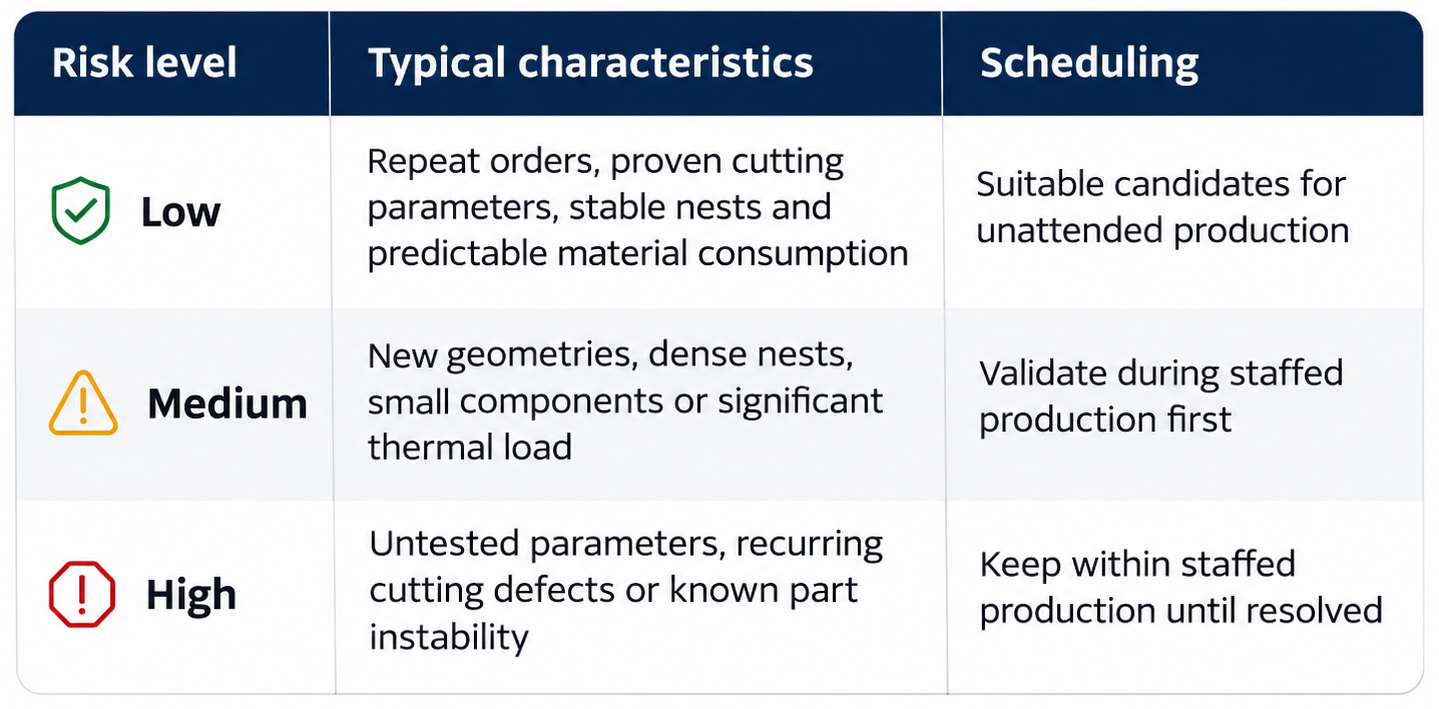
One way to introduce unattended laser cutting is to classify jobs into three categories.
This is a production planning tool, not a safety certification. Suitability also depends on the machine configuration and the manufacturer’s operating requirements.
The categories need not be permanent. A troublesome job on Monday may become perfectly suitable for overnight production by Friday, once its nesting strategy or cutting parameters have been corrected.
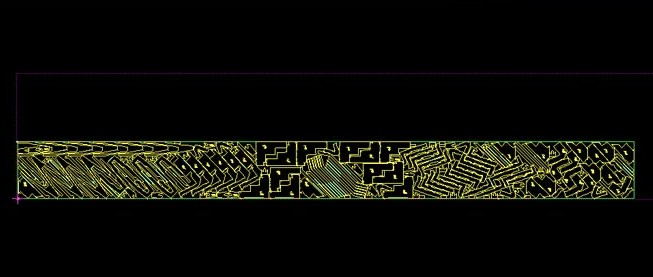
In a recent interview with The Fabricator, US metal fabricator SendCutSend described how its pursuit of maximum material yield sometimes created problems with process stability, including part tip-ups and cutting head collisions.
It’s a useful observation. Nesting efficiency is usually expressed as a percentage of material utilisation, but that figure tells you very little about how reliably the nest will cut.
A 2026 paper on CAD/CAM technologies in metalworking examines how automatic nesting can improve material yield and reduce cutting time. It also considers the importance of contour sequencing, microjoints and toolpath planning in managing collision risks and thermal distortion.
For unattended laser cutting, there are four aspects worth particular attention:
Heat deserves particular attention. A 2025 experimental study on laser cutting aluminium alloys demonstrated that thermal expansion can affect dimensional accuracy even when the cut edge appears satisfactory. A densely packed nest can therefore produce parts that look perfectly acceptable but fall outside the required tolerances.
Technologies such as NanoJoints can help retain suitable components within the sheet until processing is complete, while limiting the marks left on the finished parts. Their use should also take into account how the components will subsequently be separated, unloaded or sorted.
Before approving a nest for overnight production, look at it as it will appear halfway through the cutting process, not just as a complete sheet on the programming screen.
Sacrificing a little material yield may sometimes be the more economical decision. Steel is expensive. Six hours of lost production can be considerably more so.
A pre-production checklist for unattended laser cutting should cover at least five areas:
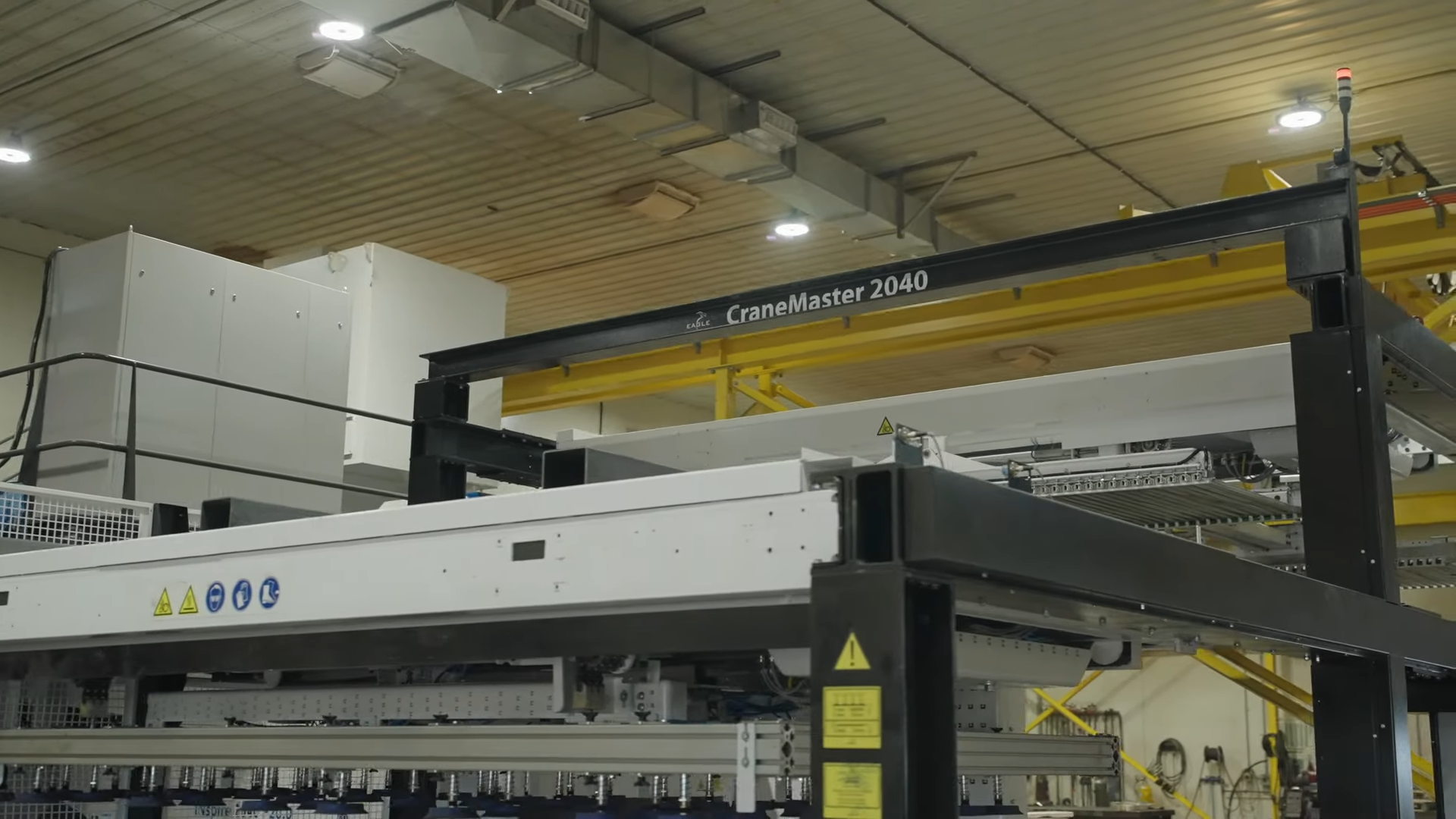
Automatic nozzle exchange can reduce routine intervention. Automated loading, unloading and storage systems, such as our CraneMaster and eTower, extend production capacity beyond the material available on a single pallet.
At Borderland Manufacturing in Canada, the introduction of a 20 kW Eagle iNspire with CraneMaster automation enabled 24-hour operation and helped the company double its production output.
Remote monitoring also has its place. Our Eagle Eye provides visibility of machine activity, but a camera is not a substitute for appropriate safety systems or a defined response procedure.
HAL 9000’s “I’m afraid I can’t do that” might be one of cinema’s more unsettling lines. On an unattended production line, however, refusing to continue under abnormal conditions can be exactly the right response.
The first thing to check in the morning isn’t how long the machine has been running, but how much usable production it has delivered.
Compare the scheduled jobs with the completed ones. If there’s a discrepancy, establish where the time went. Was it a material supply issue? A cutting interruption? An unloading problem? Did the machine simply finish its production queue earlier than expected?
The distinction matters because each problem requires a different response:
Our MyERS production reporting system provides data that can help identify where production time is being lost. Reviewing these records alongside completed jobs and part quality gives manufacturers a more useful basis for evaluating unattended production.
For the business owner, the economic measure is the additional saleable output generated overnight, weighed against the additional operating costs and manual work required the following morning.
And before investing in another storage tower, take a look at last month’s interruption records. If the machine regularly stops for reasons unrelated to material supply, more storage probably isn’t the next thing you need.