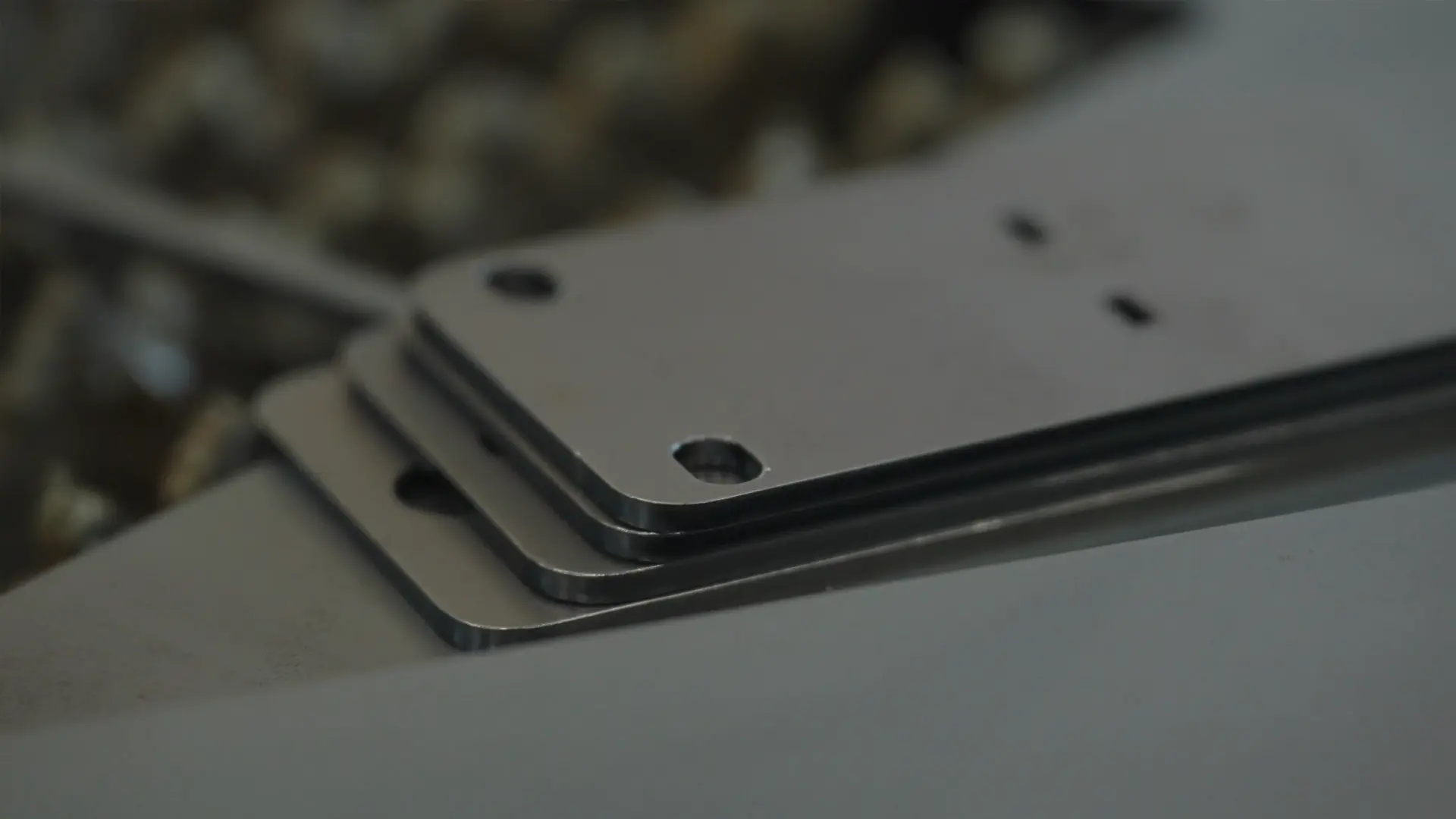
Two sheets of the same material, same thickness, cut on the same machine. One finishes comfortably within the expected time. The other takes considerably longer, although the total cutting distance isn’t much different.
The operator checks the program. Nothing obviously wrong. The machine reaches its programmed cutting speed, the parts look fine, and there are no alarms to explain the delay.
Then someone counts the holes.
Piercing is one of those operations that rarely gets much attention until something goes wrong. It happens before the actual cutting begins and tends to disappear into the overall cycle time. On a nest containing hundreds of internal contours, those fractions of a second start adding up.
The question is whether piercing is genuinely slowing production or simply getting the blame for something else.
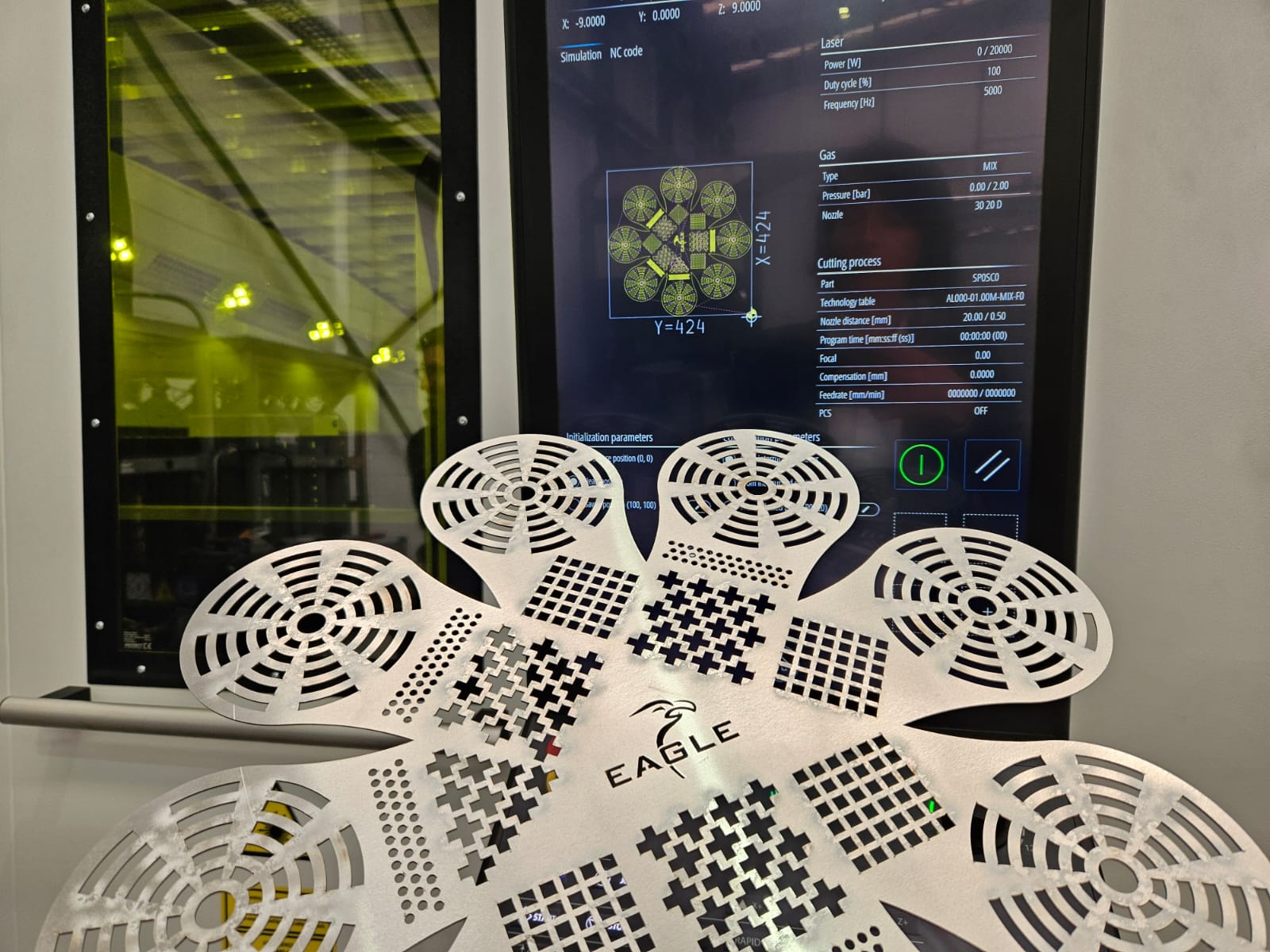
Start with a production nest you run regularly. Record its total cycle time and count the individual piercing operations. If the machine’s control or reporting software distinguishes piercing from cutting and positioning, examine those figures separately.
Consider a sheet requiring 250 pierces, each taking an average of 1.5 seconds. That’s 375 seconds, or 6 minutes and 15 seconds, spent establishing cuts.
Reduce the average to one second and you save just over two minutes per sheet. Run the same job 20 times and you’ve recovered more than 40 minutes.
These are hypothetical figures, of course. Real piercing times vary with material, thickness and cutting strategy. But they illustrate why a relatively small change can matter on a nest full of holes, while making almost no difference to a job consisting of a few large contours.
As Indiana Jones observed in Raiders of the Lost Ark, “It’s not the years, honey, it’s the mileage.”
In this case, count the starts as well as the metres.
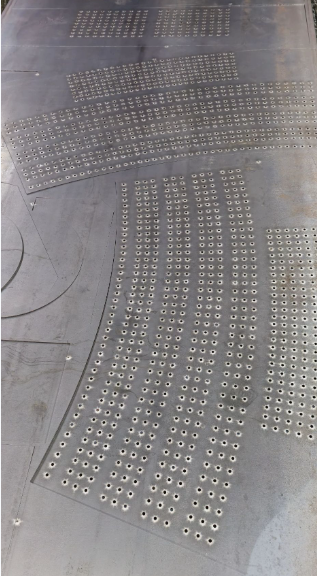
Suppose a program that previously ran without trouble suddenly starts producing excessive spatter or incomplete pierces. Is the piercing cycle too short? Perhaps. But increasing the delay before checking anything else would be a questionable diagnosis.
A worn or poorly centered nozzle, contaminated protective glass, inconsistent gas supply or a change in material condition can all affect the process. If the problem is new, compare the machine’s current condition and settings with those used for a known-good job.
If the difficulty consistently appears at a particular thickness or material, examine the piercing strategy and the resulting entry points.
The distinction matters because piercing isn’t simply about applying enough laser power to penetrate the metal. Molten material must escape from the developing hole. On thicker plate, controlling that process becomes increasingly demanding.
A 2026 study published in Procedia CIRP investigated molten-metal ejection during laser piercing using thermal-emission monitoring, high-speed imaging and machine learning. The researchers identified characteristics in optical signals associated with melt ejection, helping explain events that are difficult to observe directly.
For the operator, the implication is practical: a completed piercing cycle and a successful pierce aren’t necessarily the same thing.
And reducing a programmed delay without verifying penetration can turn a small time saving into a failed cut.

Sometimes the answer lies not in shortening a stationary piercing cycle, but in changing how the machine enters the material.
That’s the principle behind our MyEFAST technology. Instead of stopping the cutting head for a conventional pierce, MyEFAST allows it to maintain controlled movement during penetration before transitioning to full cutting speed.
The result is less time spent starting contours, reduced accumulation of molten material around the entry point, and improvements in cutting and piercing efficiency of up to 30% on suitable applications.
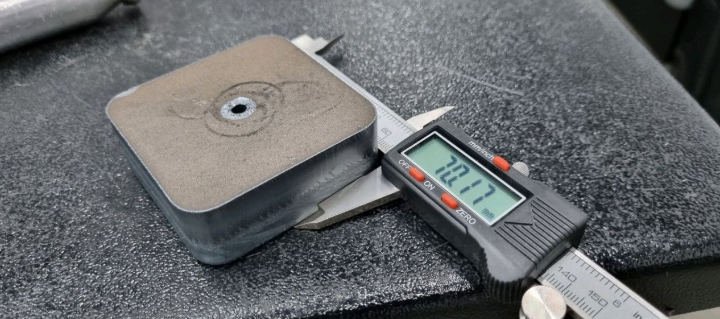
Take 20 mm Hardox, for example. In one of our cutting demonstrations, a 30 kW Eagle laser processes the material using MyEFAST at a cutting speed of 6.1 m/min. It’s a demanding application that shows how piercing and cutting strategies can work together to maintain productivity.
But the advantages aren’t limited to thicker materials.
At our Turin facility, we demonstrated MyEFAST on 1 mm stainless steel covered with protective film, using just 4 kW of laser power. Conventionally, this application can require a separate operation to vaporize the film before cutting. With MyEFAST, the cutting head continues moving without that additional step, helping prevent the protective film from bubbling and improving the quality of the finished parts.
Two very different materials, thicknesses and processing requirements. In both cases, the objective is the same: eliminate unnecessary interruptions without compromising the finished cut.
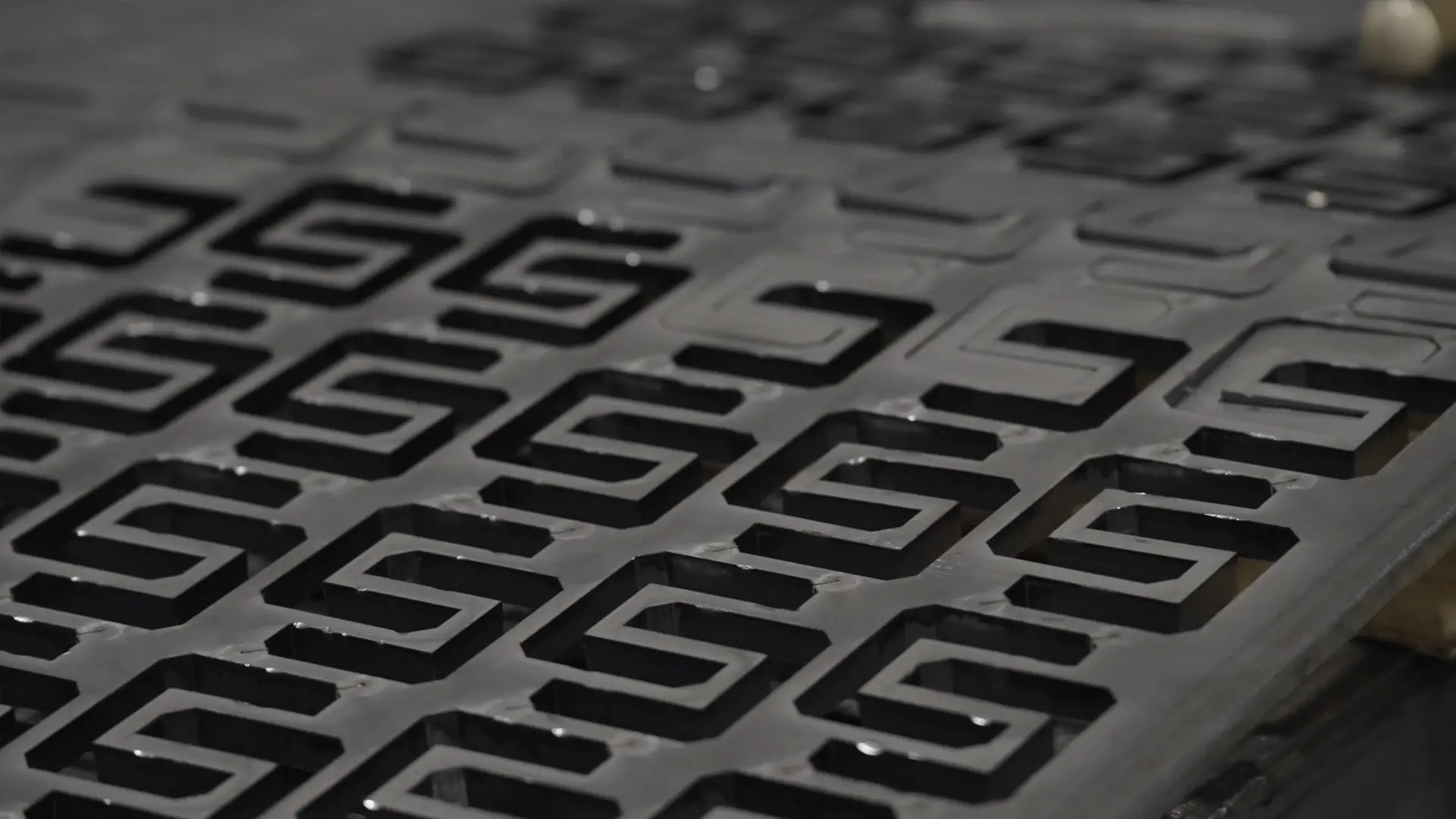
A faster start is of little value if it produces an unacceptable part.
Recent research reinforces this point. A 2026 study in The International Journal of Advanced Manufacturing Technology examined fiber laser cutting of structural steel and found that lead-in and lead-out strategies had a substantial influence on local defects around piercing points.
For an operator evaluating a new cutting strategy, that suggests a straightforward comparison.
Run a representative nest using validated parameters. Record the complete cycle time, inspect the entry points and check whether the subsequent cuts finish reliably. Pay attention to spatter, surface damage, incomplete penetration and any additional cleaning or operator intervention.
Repeat the test under comparable conditions. A single successful run doesn’t tell you much about consistency.
It’s also worth asking whether the number of pierces can be reduced through programming changes, where part geometry and quality requirements permit. A 2025 study on uninterrupted laser cutting paths explored how connecting contours can reduce piercing operations and non-cutting movements. The principle is worth considering, even if a particular job’s geometry makes such strategies impractical.
Not every production slowdown needs a new cutting parameter.
Three things are worth establishing before making changes: how much of the total cycle is spent piercing, whether those pierces are consistently successful, and whether the proposed improvement reduces the time required to produce acceptable parts.
That last distinction tends to get overlooked.
A program that finishes 20 seconds faster but occasionally requires an operator to recover a failed cut isn’t necessarily an improvement. Neither is a faster piercing strategy that leaves entry points requiring additional finishing.
And some nests simply don’t contain enough piercing operations for optimization to make much difference. In those cases, cutting speed, positioning movements or material handling may be better places to look.
There is no reason to make piercing the villain of every slow cutting program.
But when a machine spends a noticeable part of its working day repeatedly establishing cuts, it’s worth finding out whether those starts are taking longer than necessary.
The first useful number isn’t always the cutting speed.
Sometimes it’s the time between one contour and the next.