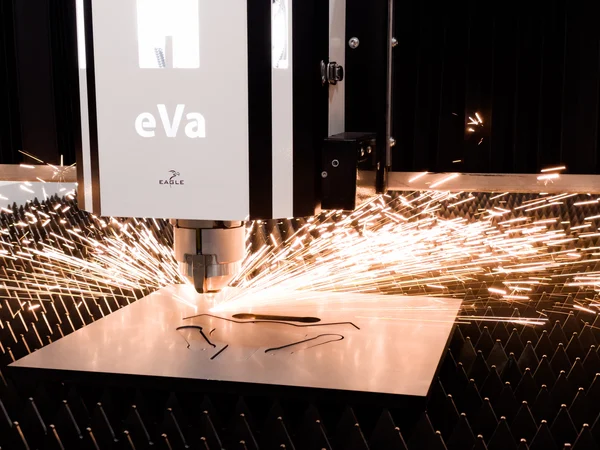
Fiber lasers are generally superior to CO₂ lasers for modern sheet metal cutting due to:
However, CO₂ lasers can still be relevant in niche applications involving non-metal materials or specific thickness ranges.
Fiber laser vs CO₂ laser cutting is one of the most important comparisons in modern sheet metal manufacturing. As production demands shift toward higher efficiency and lower cost per part, manufacturers are increasingly choosing fiber laser cutting over traditional CO₂ systems.
This shift is not driven by trends, but by measurable advantages in performance and economics. If you want a deeper technical understanding of the underlying principle, it’s worth exploring how a fiber laser works, as the architecture itself explains many of the efficiency gains discussed below.
Today, fiber lasers represent the dominant solution in industrial laser cutting. The reasons behind this shift become clear when comparing the two technologies from an engineering and production perspective.
Fiber laser systems require significantly less electrical power than CO₂ lasers to achieve comparable, or higher, cutting performance.
The simpler architecture of fiber lasers enables more efficient use of electrical input. In practical terms, fiber systems can consume substantially less energy during both active cutting and idle operation, whereas CO₂ systems often draw considerable power even when not processing material.
Lower energy consumption directly reduces operating costs and improves overall production efficiency.
In short:
Fiber lasers are significantly more energy-efficient than CO₂ systems.
The result:
Fiber systems consume substantially less electricity during both cutting and idle states, directly reducing operational costs.
CO₂ laser systems rely on complex subsystems to generate and deliver the laser beam. These typically include gas circulation components, vacuum systems, turbines, optical mirrors, resonator gases, and extensive cooling infrastructure. Many of these elements require regular cleaning, alignment, or replacement and contribute to higher maintenance effort.
Fiber laser systems are built around a sealed, solid-state architecture with minimal moving parts. Beam delivery occurs through optical fiber rather than mirror-based paths, reducing sensitivity to contamination and misalignment. Fewer consumables and simpler cooling requirements result in lower maintenance demands and reduced lifetime costs.
In short:
CO₂ laser systems are mechanically complex and require frequent maintenance and alignment due to:
Fiber lasers, by contrast:
The result:
Lower maintenance frequency, reduced downtime, and lower total cost of ownership. For many manufacturers still running legacy equipment, this is often the tipping point. If you’re evaluating whether your current setup is still viable, it’s worth considering when to upgrade from older technologies, especially as maintenance costs begin to outweigh productivity gains.
One of the fundamental differences between the two technologies lies in how electrical energy is converted into laser output.
CO₂ lasers generate light by exciting gas molecules, a process that involves multiple energy conversion steps and inherent losses. Fiber lasers, by contrast, use laser diodes to convert electrical energy directly into light, which is then amplified in a solid-state medium.
As a result, fiber lasers achieve substantially higher electrical-to-optical conversion efficiency, meaning more usable cutting power is produced from the same electrical input. This efficiency advantage contributes directly to lower energy costs per part.
In short:
Electrical-to-Optical Efficiency is one of the most critical technical differences.
The Result:
More usable cutting power per kWh leading to lower cost per part.
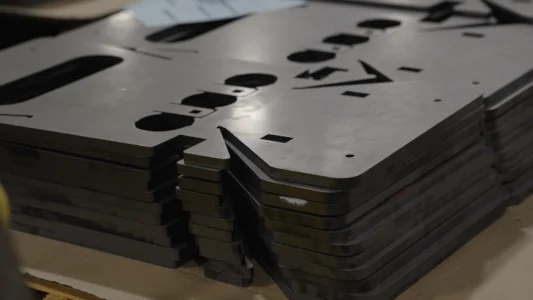
CO₂ lasers face limitations when processing reflective metals such as copper, brass, and certain aluminum alloys. Reflected energy can return toward optical components, increasing the risk of damage and restricting cutting capability.
Fiber lasers operate at a shorter wavelength and use fiber-based beam delivery, which allows them to process both reflective and non-reflective metals more safely and effectively. Modern high-power fiber lasers are capable of cutting thin and thick materials alike, including heavy mild steel sections that were once considered beyond the practical range of fiber technology.
In short:
CO₂ lasers struggle with reflective materials like:
Reflected beams can damage optical components.
Fiber lasers:
The result:
Greater flexibility in modern manufacturing environments. This versatility is one of the key reasons manufacturers increasingly choose fiber laser for sheet metal cutting, especially when working with a wide range of materials.
The shorter wavelength of fiber lasers enables the beam to be focused into a smaller spot size compared to CO₂ lasers. This higher energy density improves cutting precision and supports fine details, sharp corners, and consistent kerf geometry.
Because the process is non-contact and the heat-affected zone is relatively small, fiber laser cutting can produce clean edges with minimal burr formation or thermal distortion. However, achieving this level of consistency is not only a function of the beam itself, but also of how the process is controlled. Modern laser cutting software and technology play a critical role in optimizing cutting parameters, motion dynamics, and path strategies in real time.
Advanced motion control further enhances accuracy by allowing rapid acceleration and deceleration without sacrificing path fidelity.
In short:
Fiber lasers produce:
This leads to:
The Result:
Higher precision, especially for intricate geometries.
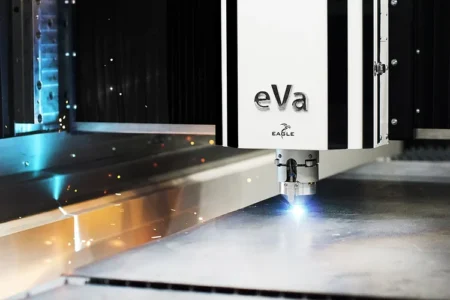
Modern fiber laser systems are available at power levels that exceed those traditionally associated with CO₂ technology. High laser power, combined with high acceleration and fast positioning, translates directly into increased cutting speed.
Faster cutting means more parts produced per hour, higher machine utilization, and improved production economics. As throughput increases, the cost per part decreases, making power and motion dynamics critical factors in profitability.
In short:
Modern fiber lasers:
The result:
This is one of the main economic drivers behind fiber adoption.
Fiber laser systems contribute to more sustainable manufacturing in several ways. Their higher energy efficiency reduces overall power consumption, while instant start-up and standby modes prevent unnecessary energy use.
Compact machine designs allow more productive capacity within a smaller footprint, and precise cutting reduces scrap and material waste. Fewer consumables and longer component lifespans further reduce environmental impact over the machine’s lifecycle.
In short:
Fiber lasers contribute to more sustainable production:
The Result:
Lower environmental footprint over the machine lifecycle.
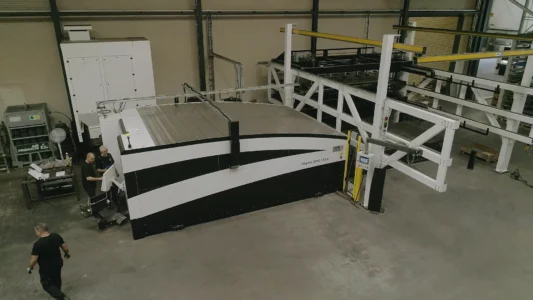
When comparing fiber laser and CO₂ laser cutting technologies, the advantages of fiber systems extend across energy efficiency, operating cost, precision, versatility, and sustainability.
Fiber laser cutting delivers faster processing, lower cost per part, and greater flexibility for modern sheet metal production. These combined benefits explain why fiber lasers have become the preferred solution in metal processing facilities worldwide, and why their adoption continues to grow.
Fiber Laser vs CO₂ Laser: Comparison Chart
| Feature | Fiber Laser | CO₂ Laser |
| Energy Efficiency | Very high (direct diode conversion) | Low (multi-step gas process) |
| Operating Costs | Low | High |
| Maintenance | Minimal (sealed system) | Frequent (mirrors, gas, optics) |
| Cutting Speed | Very fast | Slower |
| Precision | High (small spot size) | Moderate |
| Reflective Materials | Excellent (copper, brass, aluminum) | Limited / risky |
| System Complexity | Simple | Complex |
| Downtime Risk | Low | Higher |
| Environmental Impact | Lower | Higher |
| Best Use Cases | Metal cutting (thin to thick) | Some non-metals, legacy setups |