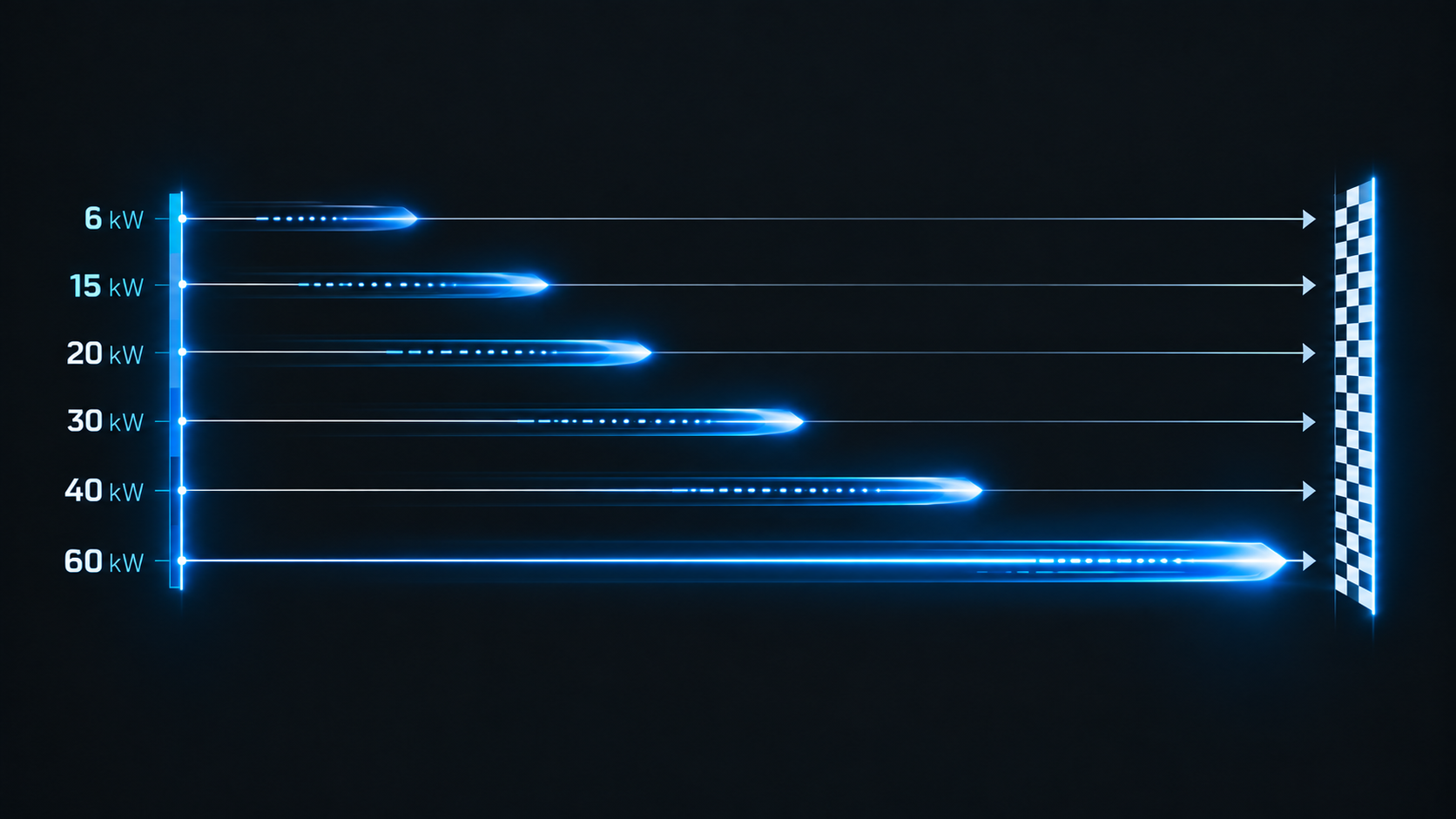
There was a time, not that long ago, when the easiest way to compare laser cutting machines was to look at a single parameter: Power. The equation was simple: the higher the wattage, the more capable the machine. Trade shows started to feel like quiet competitions of power escalation, with each new generation pushing the limits further: 6 kW, 10 kW, 20 kW, 30 kW, 40 kW, and so on. More power meant faster cutting, thicker materials, higher productivity, or at least that was the assumption.
And for a while, it worked. Power did change the game. It expanded what was possible and redefined expectations across the industry. Naturally, manufacturers optimized for it, and customers learned to look for it. Kilowatts became the shorthand for performance.
But walk through a trade show today, and something has shifted. The numbers are still there, but they no longer stand out in the same way. High-power fiber lasers are everywhere. What was once a differentiator has become standard. And when everyone has access to the same level of power, it stops being the factor that sets machines apart.
That realization becomes even clearer when you step out of an exhibition and onto the shop floor. In real-world conditions, the machine doesn’t spend every shift cutting long, straight lines at peak speed. Instead, it operates in a far more complex and demanding cycle: piercing, repositioning, accelerating, decelerating, navigating tight corners, executing intricate contours, and repeating this sequence thousands of times over the course of a shift that often stretches beyond 20 hours.
It is in this constant motion, not in peak cutting speed, where performance is truly defined.
Two machines may offer identical power on paper, yet behave entirely differently in practice. One moves with control and fluidity, maintaining precision even as it accelerates through complex geometries. The other introduces small inefficiencies, subtle vibrations, micro-delays in direction changes, slight losses in accuracy, that accumulate over time. At first, these differences are almost imperceptible. By the end of a full production cycle, they are anything but.
So, if every machine offers the same power, but not every machine delivers the same level of productivity, the question becomes: what sets those machines apart? It’s clear that power alone no longer explains productivity. The real differentiator lies in motion.
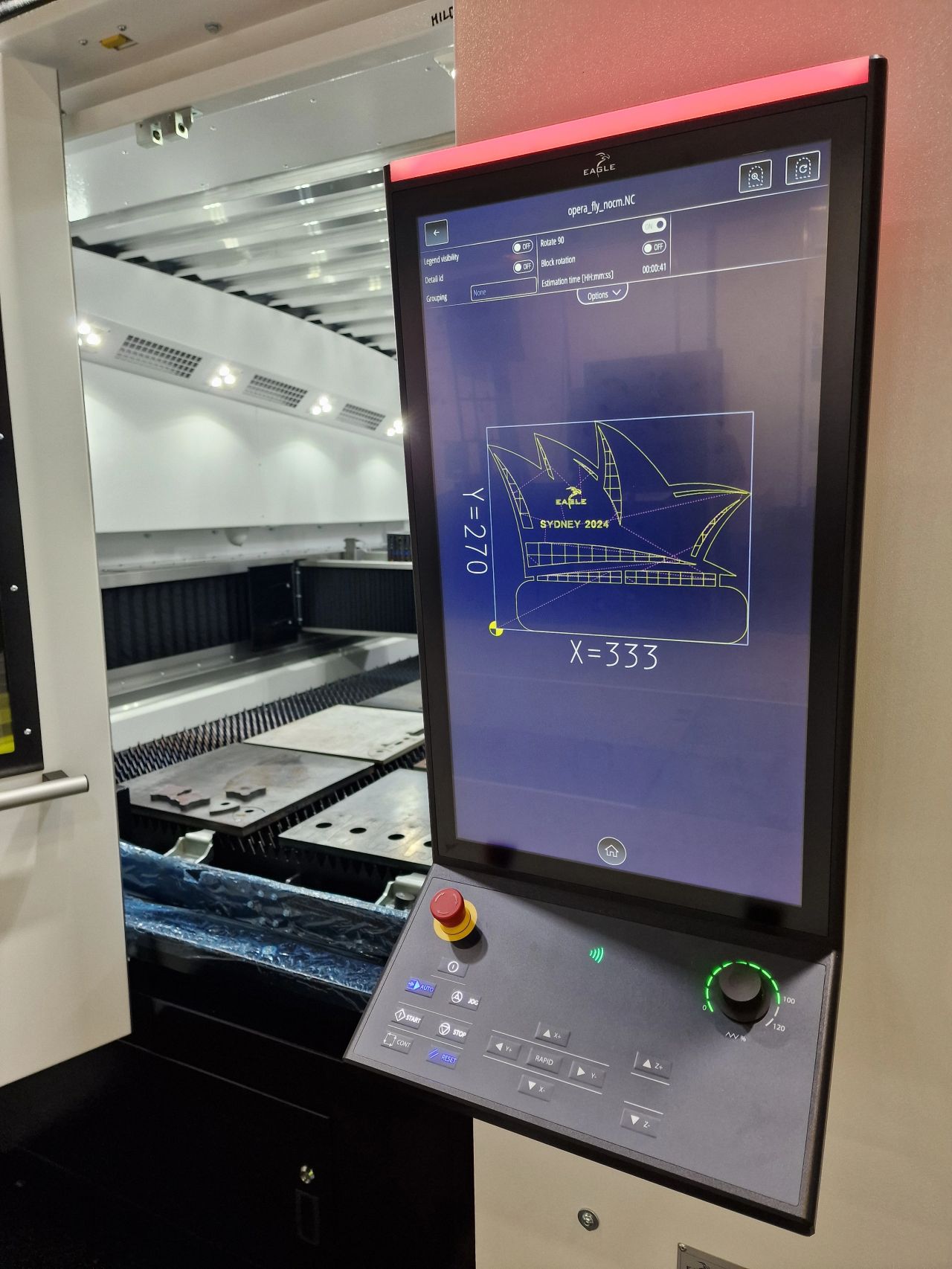
Understanding this requires a shift in perspective. A high-performance laser cutting machine cannot be viewed simply as a tool for delivering energy to material. It must be understood as a dynamic system, where every movement, every axis, every structural component, every feedback loop, contributes to the final result. In this sense, the most advanced laser systems today have more in common with premium machining centers than with traditional sheet metal equipment.
Achieving this level of performance is not about a single feature, but about a coherent engineering approach. It begins with eliminating mechanical limitations wherever possible, for example, by using linear motors on all axes to remove backlash and ensure immediate, precise response. It continues with ultra-accurate position feedback, where nanometric resolution allows the machine to maintain exact control even at high speeds. Structural design plays an equally critical role: materials such as polymer concrete help dampen vibrations rather than transmit them, while lightweight yet rigid components, like a carbon fiber bridge, enable rapid acceleration without sacrificing stability.
Individually, each of these decisions improves a specific aspect of performance. More importantly, when they work together, they define how the machine behaves in motion, how smoothly it transitions, how accurately it follows a path, and how consistently it performs over time.
And consistency is the key point. Peak speed is easy to demonstrate under ideal conditions. Sustained performance, however, is what determines real productivity. A machine that can maintain precision and stability at full speed, hour after hour, day after day, ultimately delivers far greater value than one that only excels in short bursts.
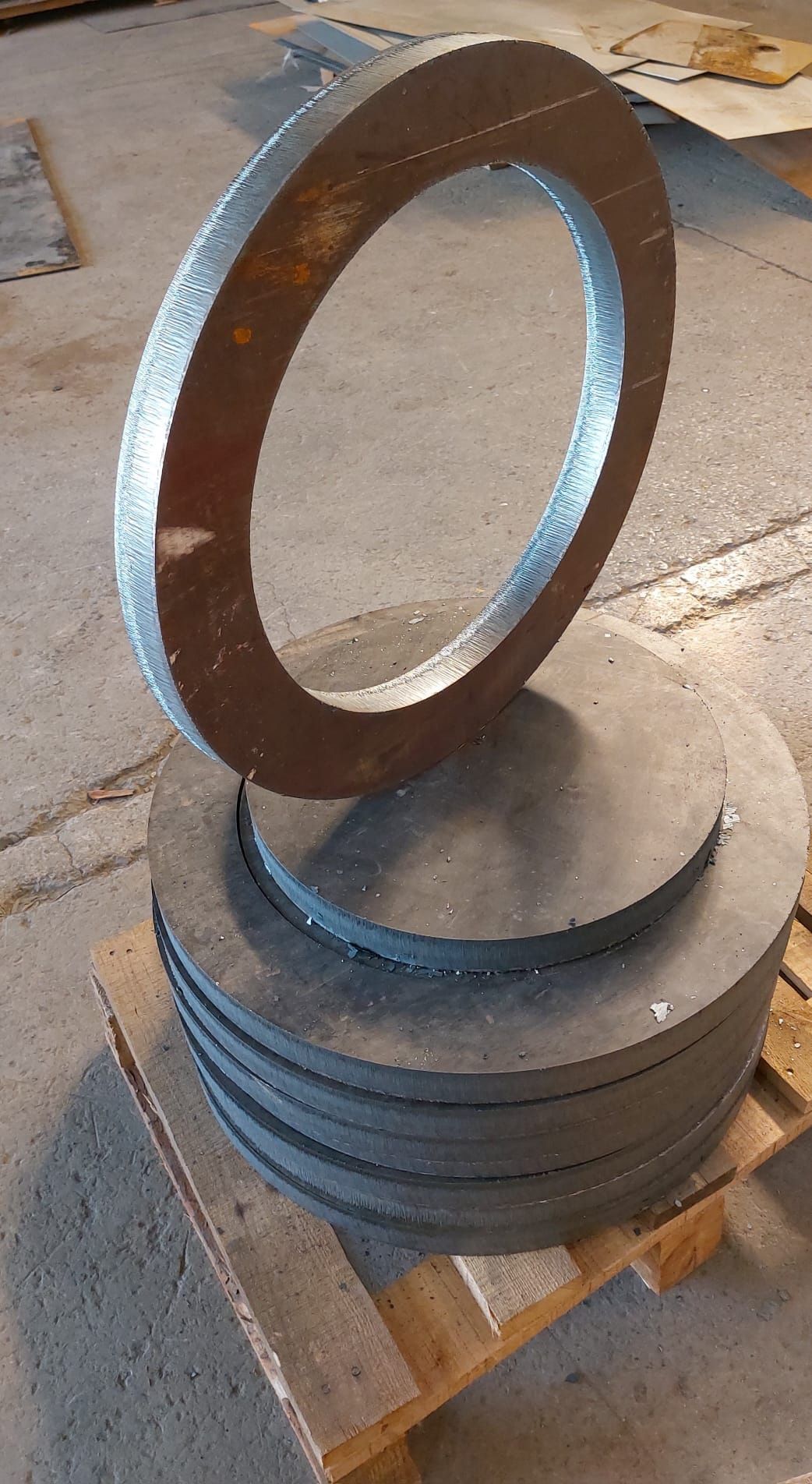
This is where reliability and motion become inseparable. Because a machine that can’t move predictably at high speed will inevitably compromise either quality or uptime. In contrast, a system designed with motion at its core is capable of delivering both high throughput and repeatable accuracy, without trade-offs.
As a result, the way we evaluate laser cutting technology is changing. The traditional question: “How powerful is the laser?” is no longer enough to capture what truly matters. Power has become the baseline, the entry point into the market. The more meaningful question today looks simpler but us is far more demanding: “How good is the machine?”
Because the answer doesn’t lie in specifications alone, but in behavior under real production conditions. It’s visible in how the machine performs deep into a shift, how it handles complexity, and how it maintains quality over time. These are the factors that ultimately define cost per part, throughput, and long-term reliability.
As the industry moves beyond the kW race, the competitive landscape is being reshaped. The shops that will succeed are not those chasing ever-higher power levels, but those that understand the factors that guarantee true, long-term performance.
The kW race is not over because power stopped improving. It is over because power stopped being enough. Everyone has it now. Everyone won.
What happens next will be decided in the precision of movement, in the stability of the system, and in the ability to sustain performance over time.
Power is the price of admission. Motion to match its capabilities is the competitive advantage.