Less time spent searching
Material locations are stored digitally, so operators do not need to manually search the warehouse for the required stack.
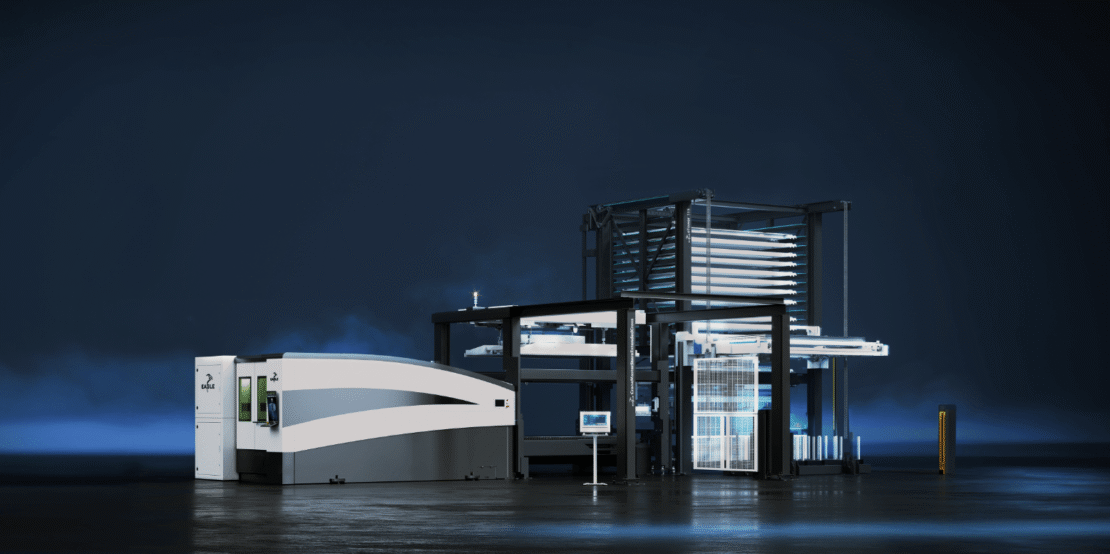
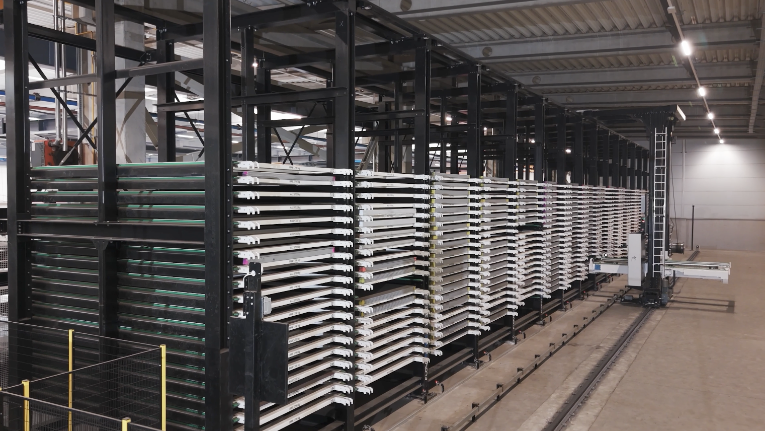
FlowStore is an automated sheet metal warehouse designed to organize material, manage inventory, and deliver the required sheets to defined transfer points. By combining modular storage towers, dedicated shelves and warehouse-management software, FlowStore creates a more predictable flow of material throughout production.
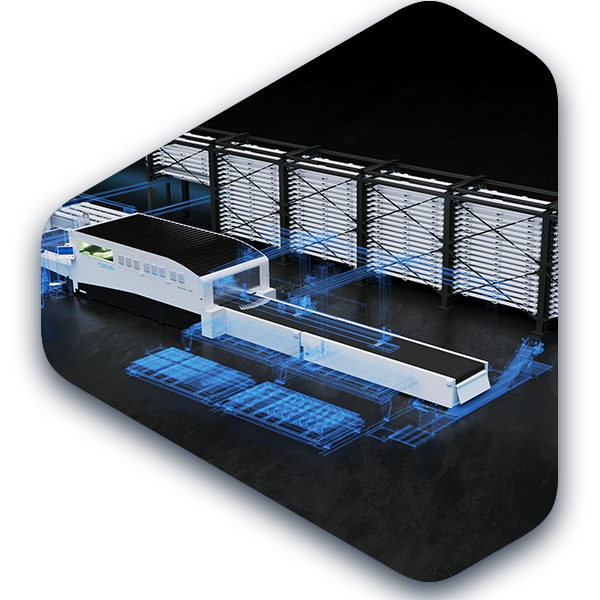
In conventional sheet metal warehouses, material flow often relies on forklifts, manual checks, and operator knowledge. FlowStore combines storage, identification, and retrieval in one controlled process, ensuring the correct material is ready for production.
Material locations are stored digitally, so operators do not need to manually search the warehouse for the required stack.
Material requests can be matched with inventory information such as type, thickness, dimensions, batch, and quantity.
Physical storage positions correspond with digital material records, providing more reliable information about available stock.
Automatic retrieval and buffering help prepare sheets at the correct transfer point before the next process needs them.
Structured material supply supports multiple laser machines, increasing productive cutting time and overall output.
FlowStore manages the complete warehouse process from the moment material arrives to the moment it is prepared for the next production stage.

New sheets are delivered to an external loading/unloading station. Material can enter the warehouse without the operator accessing the automated working area.
The material is registered according to parameters such as type, thickness, dimensions, batch number, and available quantity.
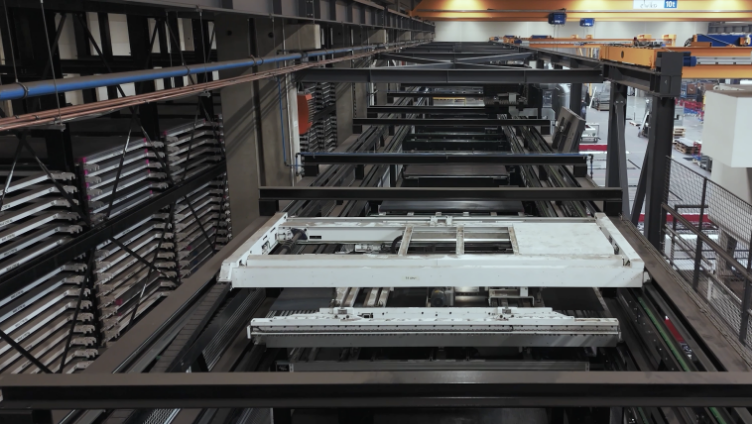
A loading trolley introduces the material into the warehouse. The stacker crane collects the shelf and places it in its assigned storage position.
When production requires new material, the warehouse receives a request containing the necessary sheet parameters.
FlowStore identifies a matching batch and delivers the selected shelf to the appropriate transfer point.
Every FlowStore installation is designed around the customer’s material profile, storage requirements, factory layout, and production flow. These 6 parameters will help you make an informed configuration decision.
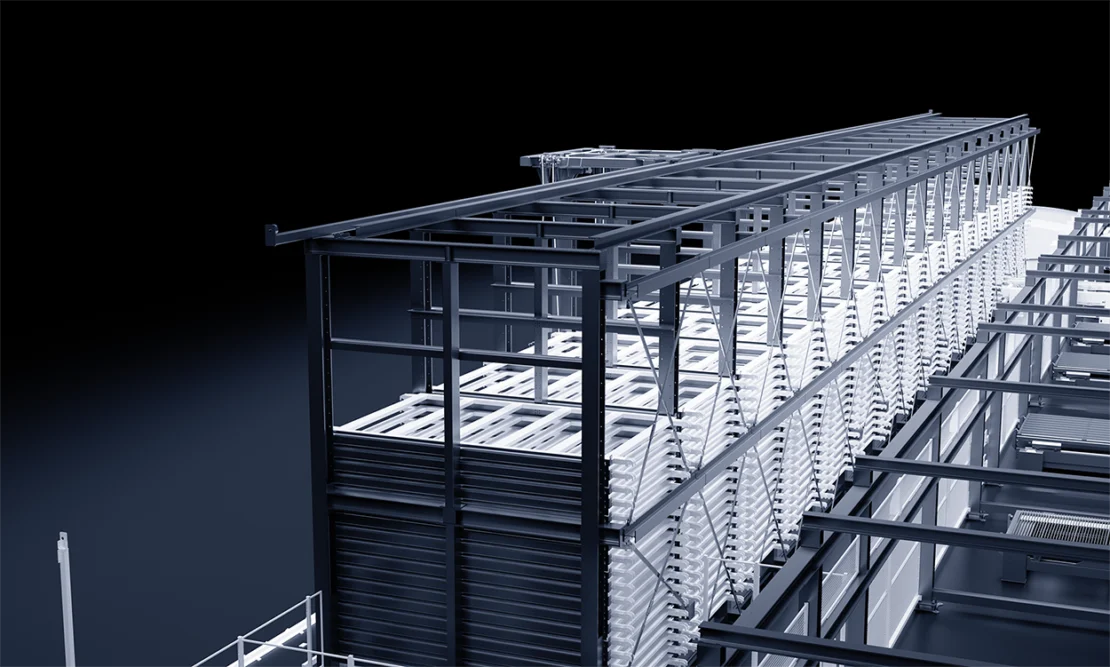
FlowStore is built around a modular storage structure, so its capacity can be configured according to the requirements of a specific production environment. The number of storage towers and shelves can be adapted to the expected material volume, available floor space, sheet formats and production demand. This makes it possible to create a storage system that reflects the actual material flow of the facility rather than relying on a fixed warehouse configuration.
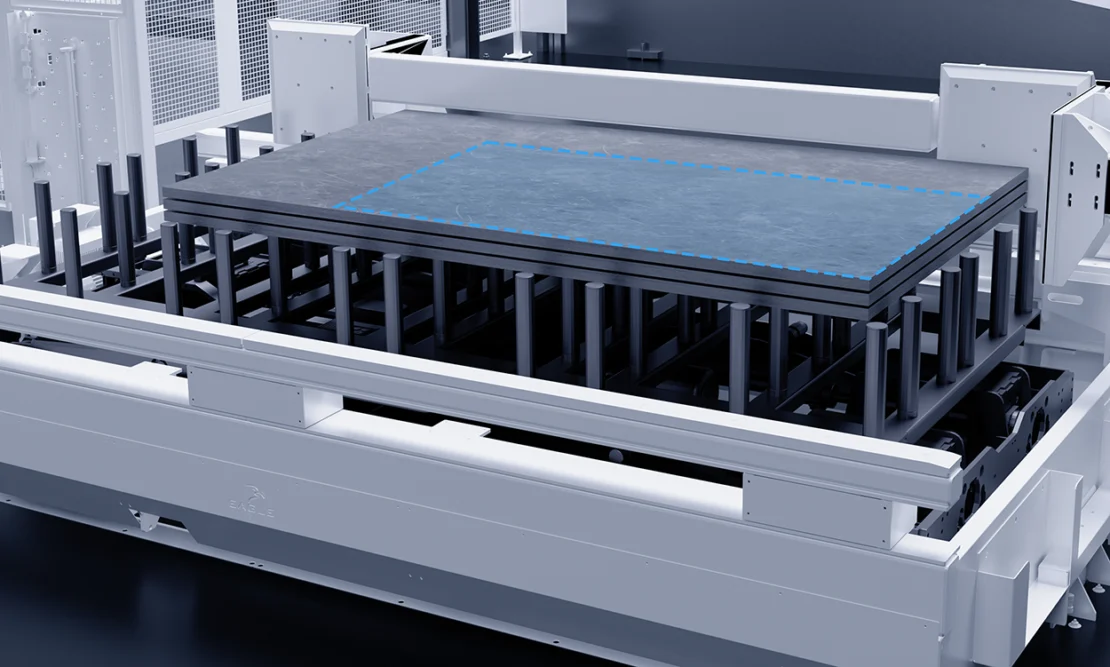
FlowStore configuration adapts to the sheet dimensions used within the production facility. Storage shelves, material locations and transfer arrangements can therefore be planned around the formats required by the connected production processes. Because supported sheet formats are defined individually for each project, the storage system can be configured around the real material requirements and factory layout rather than a single predefined format.
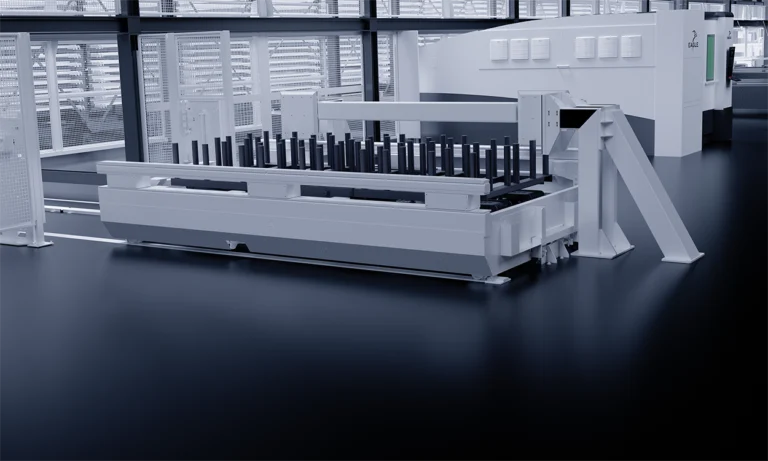
External loading and unloading stations provide a controlled interface between incoming material and the automated warehouse. Sheets can be introduced into or removed from FlowStore without requiring the operator to enter the automated working area. Depending on the configuration, material can be delivered by forklift or deposited on a pallet, while the loading trolley transfers the corresponding shelf between the external station and the internal storage system.
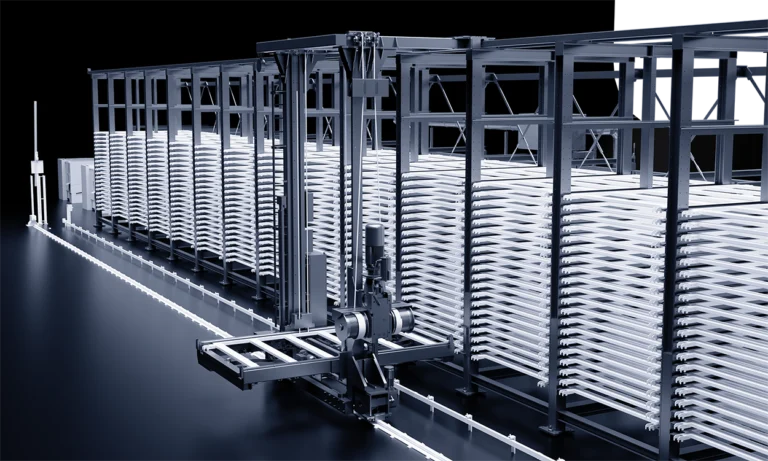
Transfer points connect FlowStore with the next stage of material handling or production. When material is requested, the stacker crane retrieves the appropriate shelf and delivers it to the designated location, where it can be collected by the following process. FlowStore can also prepare material in advance at selected transfer points, helping reduce waiting time when the next sheet is required.
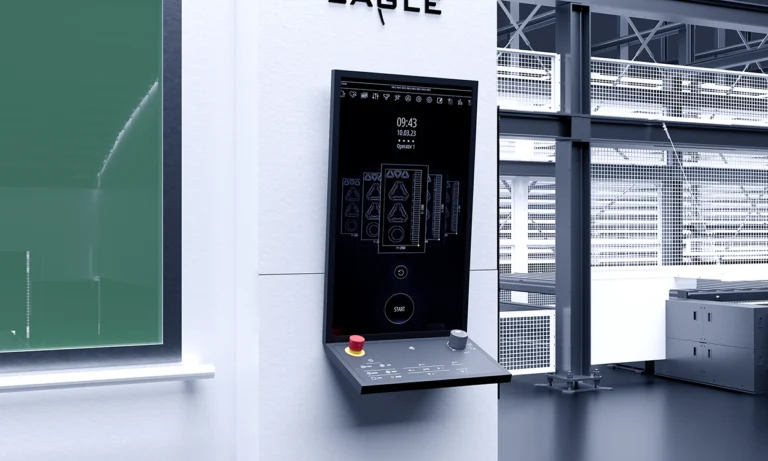
FlowStore connects physical material movement with digital inventory information. Through a dedicated interface, warehouse data can be exchanged with external production-planning or CAD/CAM environments. This allows information about available materials to remain synchronized and gives production systems access to current warehouse data when jobs are being prepared, supporting more coordinated material planning across the production process.
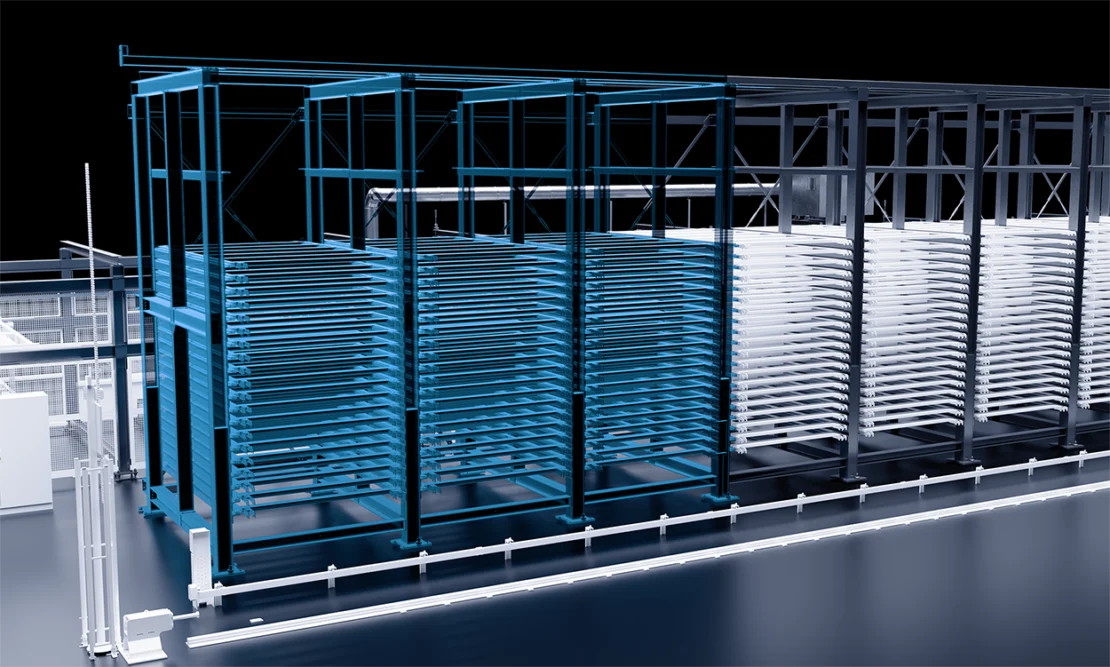
The modular architecture allows FlowStore to evolve together with production requirements. The number of storage towers, shelves and transfer positions can be adapted to the required capacity and available factory space, while the system architecture allows for future extension. This means the warehouse can be planned not only around current material-flow requirements, but also with potential increases in storage capacity or changes in the production layout in mind.
FlowStore is built around a modular storage structure, so its capacity can be configured according to the requirements of a specific production environment. The number of storage towers and shelves can be adapted to the expected material volume, available floor space, sheet formats and production demand. This makes it possible to create a storage system that reflects the actual material flow of the facility rather than relying on a fixed warehouse configuration.
FlowStore configuration adapts to the sheet dimensions used within the production facility. Storage shelves, material locations and transfer arrangements can therefore be planned around the formats required by the connected production processes. Because supported sheet formats are defined individually for each project, the storage system can be configured around the real material requirements and factory layout rather than a single predefined format.
External loading and unloading stations provide a controlled interface between incoming material and the automated warehouse. Sheets can be introduced into or removed from FlowStore without requiring the operator to enter the automated working area. Depending on the configuration, material can be delivered by forklift or deposited on a pallet, while the loading trolley transfers the corresponding shelf between the external station and the internal storage system.
Transfer points connect FlowStore with the next stage of material handling or production. When material is requested, the stacker crane retrieves the appropriate shelf and delivers it to the designated location, where it can be collected by the following process. FlowStore can also prepare material in advance at selected transfer points, helping reduce waiting time when the next sheet is required.
FlowStore connects physical material movement with digital inventory information. Through a dedicated interface, warehouse data can be exchanged with external production-planning or CAD/CAM environments. This allows information about available materials to remain synchronized and gives production systems access to current warehouse data when jobs are being prepared, supporting more coordinated material planning across the production process.
The modular architecture allows FlowStore to evolve together with production requirements. The number of storage towers, shelves and transfer positions can be adapted to the required capacity and available factory space, while the system architecture allows for future extension. This means the warehouse can be planned not only around current material-flow requirements, but also with potential increases in storage capacity or changes in the production layout in mind.
One connected system for physical and digital material control
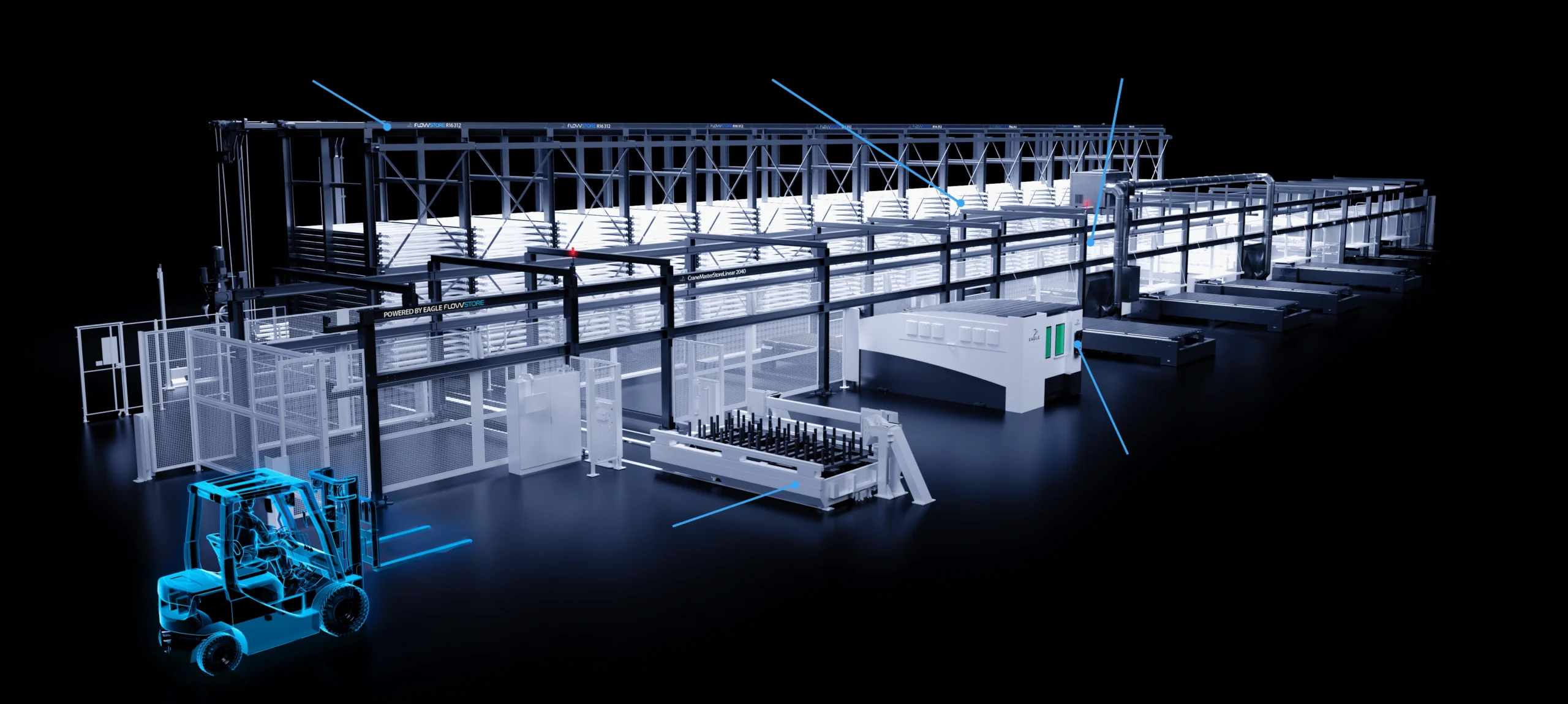
A multi-level structure uses available building height and can be adapted to the required number of towers, shelves, and transfer points.
Each shelf carries material through the system and has an assigned digital position within the warehouse.
The stacker crane moves horizontally and vertically, transporting shelves between storage positions, loading stations, and transfer points.
The trolley transfers shelves between the external operator area and the internal automated warehouse.
The software manages material records, quantities, batch information, storage locations, shelf assignments, requests, and communication with external systems.
Reduce forklift movement and manual transport between material reception, storage, and production.
Automatically retrieve and prepare the required sheets at the correct transfer point.
Keep structured information on material type, thickness, dimensions, batch, and available quantity.
Use vertical storage capacity to organize a large amount of material within a controlled footprint.
Limit uncontrolled material movement and reduce risk of scratches, damage, or incorrect stacking.
Adapt the number of towers, shelves, loading points, and transfer positions as production requirements develop.
Is conventional material storage becoming a production constraint? FlowStore becomes relevant when warehouse organization, inventory visibility, or internal transport begins to limit production performance. This checklist should help you determine if FlowStore makes sense for your factory.
FlowStore connects the physical position of stored material with its digital inventory record.
Material requests can be matched against current warehouse data using parameters such as material type, thickness, format, batch, and available quantity. Once the correct material has been identified, the system delivers it to a defined transfer point for collection by the next process.
Through a dedicated software interface, current warehouse data can also support production planning and job preparation.
Find clear answers to the key questions fabricators ask when choosing evaluating FlowStore. Understand its features, capabilities, and whether its the right solution for your production level.
FlowStore is an automated sheet metal warehouse that stores, identifies, retrieves, and delivers material to defined transfer points.
An eTower is a compact storage solution typically connected directly with a laser automation cell. FlowStore is a modular, warehouse-scale system designed to manage larger storage capacity, multiple material locations, configurable transfer points, and broader factory material flow.
FlowStore delivers material to defined transfer points. The next movement depends on the automation or handling system connected to that location.
The system can manage information such as material type, internal and customer-facing descriptions, thickness, sheet dimensions, batch number, and available quantity.
Yes. Batch information can be assigned to stored material and used when matching production requests with available warehouse inventory.
FlowStore can exchange inventory information with external systems through a dedicated interface. The exact integration depends on the project environment.
Yes. The number and arrangement of transfer points are configured according to the factory layout and connected processes.
Its modular architecture allows future extension, subject to the original layout, building conditions, and planned expansion strategy.
Material is delivered through an external loading and unloading station. Depending on the configuration, it may be deposited on a pallet or supplied by forklift.
The layout process should consider sheet formats, material types, expected stock volume, batch requirements, required transfer points, available floor and building height, software environment, and future capacity plans.