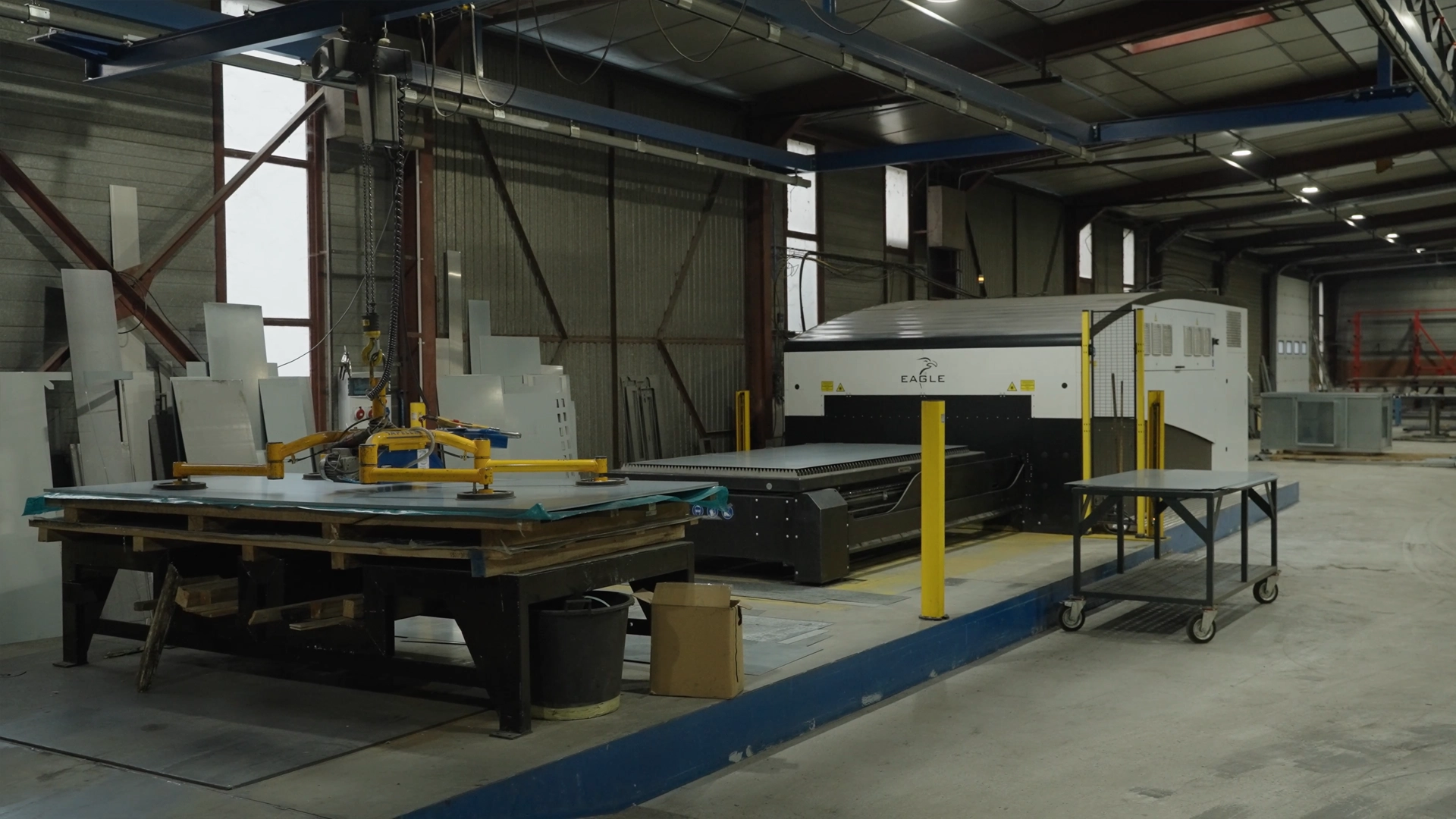
The real cost of laser cutting is not defined by machine purchase price alone. In daily production, operating cost depends on how efficiently the system uses energy, which assist gas is selected, how stable the cutting process is, and how much maintenance the machine requires over time.
For manufacturers, the most important question is not simply: how much does the machine cost to run per hour? The more useful question is: how much does it cost to produce one finished part at the required quality?
That difference matters. A process that looks cheaper per hour may become expensive if it cuts slowly, creates scrap, requires post-processing, or causes frequent interruptions. Laser cutting economics should therefore be evaluated as a complete production process, not as a set of isolated costs.
The main operating cost factors in laser cutting are:
● energy consumption
● assist gas consumption
● consumables
● maintenance
● downtime
● scrap and rework
● post-processing
● machine utilization

Each of these factors affects the final cost per part. Some are easy to measure, such as electricity use or gas consumption. Others are less visible, such as unstable piercing, poor nesting, operator intervention, or downtime caused by neglected maintenance.
This is why cost optimization in laser cutting is rarely about reducing one expense. It is about finding the right balance between speed, quality, stability, and process efficiency.
Energy is one of the most predictable elements of laser cutting cost. It depends on the full machine system, not only on the laser source. The chiller, extraction unit, drives, controls, and auxiliary equipment all contribute to total consumption.
Fiber laser technology has a clear advantage over older CO₂ systems because it uses a more efficient architecture. Fiber lasers convert electrical energy into usable laser power more directly, while CO₂ systems rely on more complex gas-based beam generation and optical delivery. For a broader comparison, see our article on Fiber Laser vs. CO₂ Laser Cutting.
However, energy cost should not be analyzed only per hour. A faster and more efficient system may use more power at a given moment, but still reduce energy cost per part if it produces more finished components in the same production time.
In short:
● energy is important, but usually predictable
● total system consumption matters more than laser source power alone
● faster cutting can reduce energy use per finished part
● efficiency should be measured against output, not only hourly consumption
Assist gas plays a central role in laser cutting. It removes molten material from the kerf, supports process stability, and influences edge quality.
The most common gases are oxygen, nitrogen, and compressed air. Each has a different impact on cost and result.
Oxygen is commonly used for mild steel. It supports the cutting process through a chemical reaction that adds heat, making it efficient for many carbon steel applications.
Nitrogen is often used for stainless steel, aluminum, and parts that require a clean, oxidation-free edge. It can deliver excellent edge quality, but it is usually the most cost-sensitive gas choice.
Compressed air can be a cost-efficient option for selected applications, especially when the edge-quality requirements allow it. It is not a universal replacement for oxygen or nitrogen, but it can be effective when process conditions and part requirements match.
The key point is simple: the cheapest gas is not always the cheapest process.
A lower-cost gas may create more finishing work. A higher-cost gas may reduce post-processing and improve downstream efficiency. The right choice depends on material, thickness, part geometry, edge requirement, and the next production step.
For more detail on how different metals behave during cutting, see What Materials Can Fiber Lasers Cut?

Consumables may look like a minor part of laser cutting cost, but they have a direct impact on process stability.
Typical consumables include:
● nozzles
● protective lenses
● ceramic holders
● filters
● selected cutting head components
A worn nozzle or contaminated protective lens can cause poor edge quality, unstable piercing, burr formation, or failed cuts. The direct cost of replacing the part may be small compared with the hidden cost of scrap, rework, and lost production time.
Maintenance works the same way. Scheduled service is visible and predictable. Unplanned downtime is not. When a machine stops unexpectedly, the cost is not limited to the repair. It can also include delayed orders, idle operators, missed delivery windows, and disrupted production planning.
Modern fiber lasers reduce maintenance compared with older systems because they use fewer optical components and do not rely on mirror-based beam delivery. Still, preventive maintenance remains essential for keeping the process stable over time.
In short:
● consumables affect cut quality and repeatability
● poor consumable condition can increase scrap and rework
● preventive maintenance protects uptime
● downtime often costs more than the repair itself
Operating costs are connected. Looking at them separately can lead to wrong conclusions.
For example, higher laser power may increase instantaneous energy use, but reduce cycle time. Nitrogen may increase gas cost, but reduce post-processing. Compressed air may lower gas cost, but only if the resulting edge quality is acceptable. Preventive maintenance may seem like an added cost, but it reduces the risk of unplanned stoppages.
That is why the most useful metric is cost per good part.
A proper cost-per-part view should include:
● cutting time
● gas strategy
● energy use
● consumables
● scrap rate
● rework
● post-processing
● labor involvement
● machine utilization
● downtime risk
A machine that is cheaper to run per hour may still be more expensive per part if it produces fewer usable components in a shift. This is one of the reasons manufacturers invest in faster fiber laser systems and better process control. The goal is not only higher cutting speed, but lower total production cost.
| Process factor | Oxygen cutting | Nitrogen cutting | Air cutting |
| Typical use | Mild steel applications | Stainless steel, aluminum, oxidation-free edges | Selected applications where edge requirements allow |
| Cost tendency | Usually economical | Usually more cost-sensitive | Often the lowest gas-cost option |
| Edge result | Application-dependent, with oxidation as part of the process | Clean, oxidation-free edge | Application-dependent |
| Post-processing impact | Depends on material and quality requirements | Can reduce finishing where clean edges are required | Depends on acceptable edge standard |
| Best evaluated by | Material type and productivity | Quality requirement and downstream savings | Cost saving versus acceptable quality |
There is no universal best option. The correct gas strategy is the one that delivers the required edge quality at the lowest total process cost.
Reducing operating cost does not mean choosing the cheapest setting. It means choosing the most efficient process for the part.
Practical areas to optimize include:
● matching assist gas to material and edge requirement
● avoiding unnecessary overuse of nitrogen
● using air cutting where quality requirements allow
● maintaining nozzles and protective lenses properly
● improving piercing stability
● reducing scrap and rework
● improving nesting efficiency
● using software to optimize paths and parameters
● preventing downtime through regular maintenance
● increasing machine utilization through better production flow

Modern laser cutting software and technology can support this by improving nesting, cutting parameters, path strategy, and process repeatability. Over time, small improvements in stability and cycle time can have a significant impact on production output.
Laser cutting operating cost is not defined by one factor. Energy, gas, consumables, maintenance, speed, quality, and uptime all interact.
Energy is usually predictable. Assist gas is often the most variable cost. Consumables and maintenance may seem secondary, but they protect the stability of the entire process.
The goal is not simply to reduce hourly cost. The goal is to reduce cost per finished part.
For manufacturers, the most profitable cutting process is the one that produces the highest number of good parts, at the required quality, with the lowest total process cost.