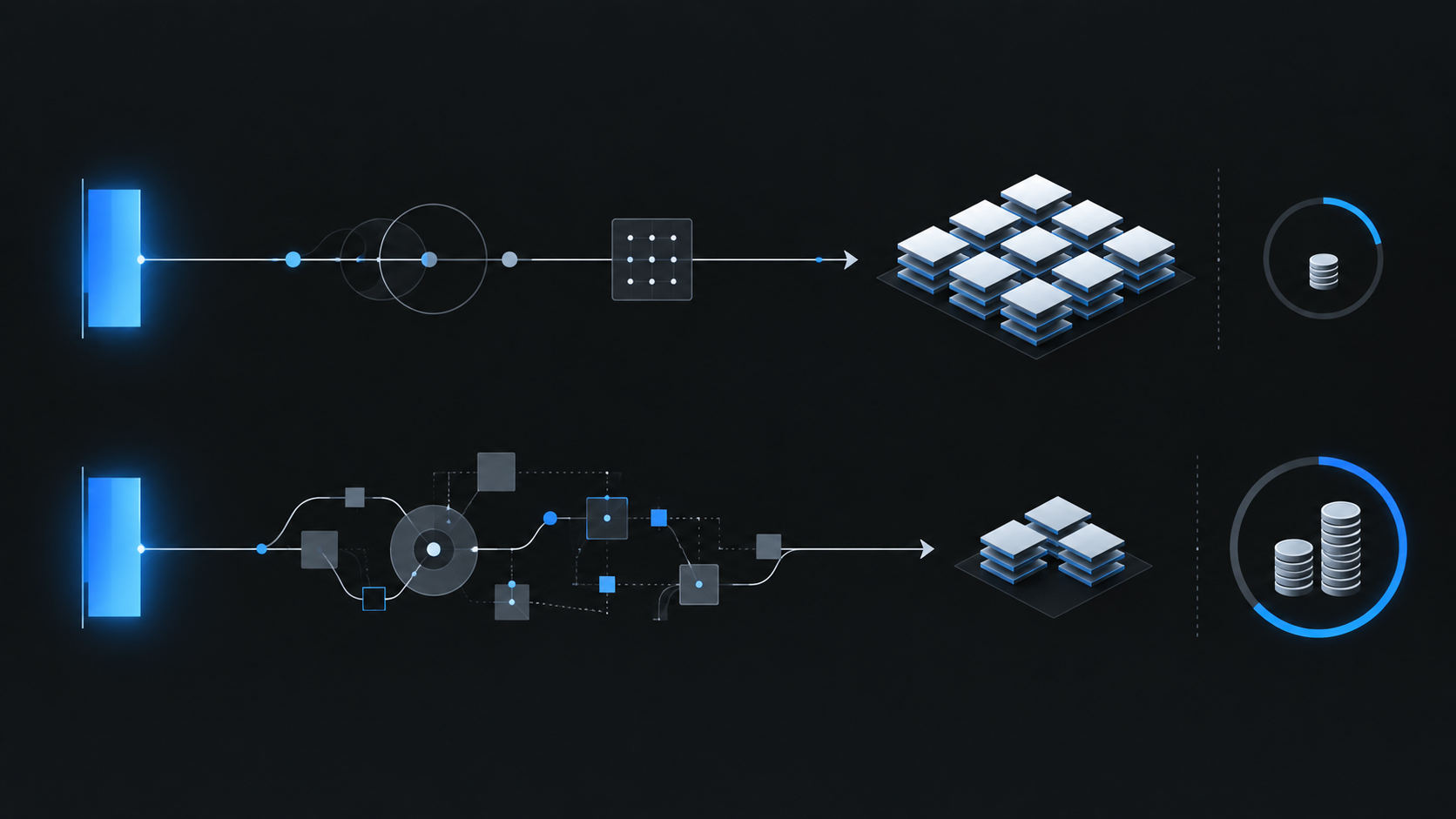
Two fiber lasers with the same kW can perform very differently in real production. Learn what actually determines cost per acceptable part.
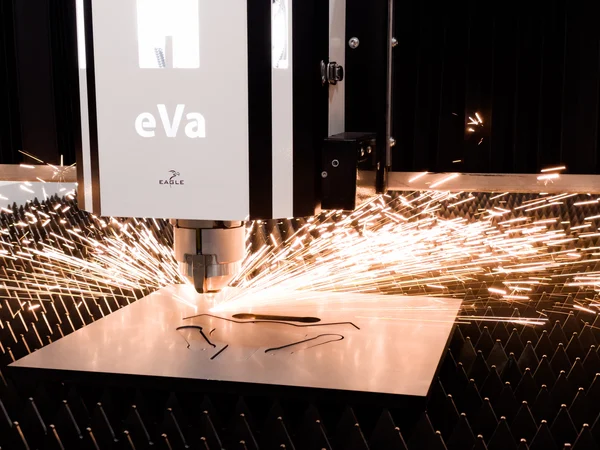
Machine comparisons often start with the most visible figures: laser power, maximum cutting speed, and purchase price. These numbers matter, but they do not describe how the machine performs throughout a real production day. Two fiber laser cutting machines can have the same power rating and appear very similar on a specification sheet. Yet once they enter production, one may complete significantly more work during a shift and produce each finished part at a lower cost.
Laser power does not tell you how effectively the complete system converts that power into acceptable finished parts.
Maximum cutting speed has a similar limitation. Real nests contain short contours, corners, small holes, frequent changes of direction, positioning movements, and repeated piercing cycles. The machine therefore spends much of its time accelerating, decelerating and repositioning rather than moving continuously at its maximum stated speed.
A machine with higher acceleration and better motion control can reach the required cutting speed faster and move through complex geometry more efficiently. The difference may only be a fraction of a second, but those fractions can accumulate into a significant amount of time.
This effect is well established in CNC manufacturing. Research published in CIRP Annals shows that actual feed rates through complex toolpaths are affected by part geometry and by the velocity, acceleration and jerk limits of the machine. As a result, commanded feed rate alone is not sufficient to predict actual cycle time.
The implication for laser cutting is simple: comparing two machines by maximum cutting speed tells you less than comparing how quickly they complete the same representative nest.
AI can identify these changes in real time and adjust your schedule accordingly. So can your most experienced workers. What they probably can’t do is predict when and where problems will occur. Research into AI applications in sheet metal forming describes how data can be used to identify patterns before process deviations become visible, moving manufacturing toward more proactive control.
Predictive maintenance follows the same principle. Sensor data such as vibration, temperature, or usage patterns can reveal changes before they result in an unexpected stoppage, allowing maintenance to be planned rather than triggered by failure.
We’re talking about a shift from reactive to effortless predictive production. Something that, until now, would have sounded more like sci-fi or wishful thinking than reality.
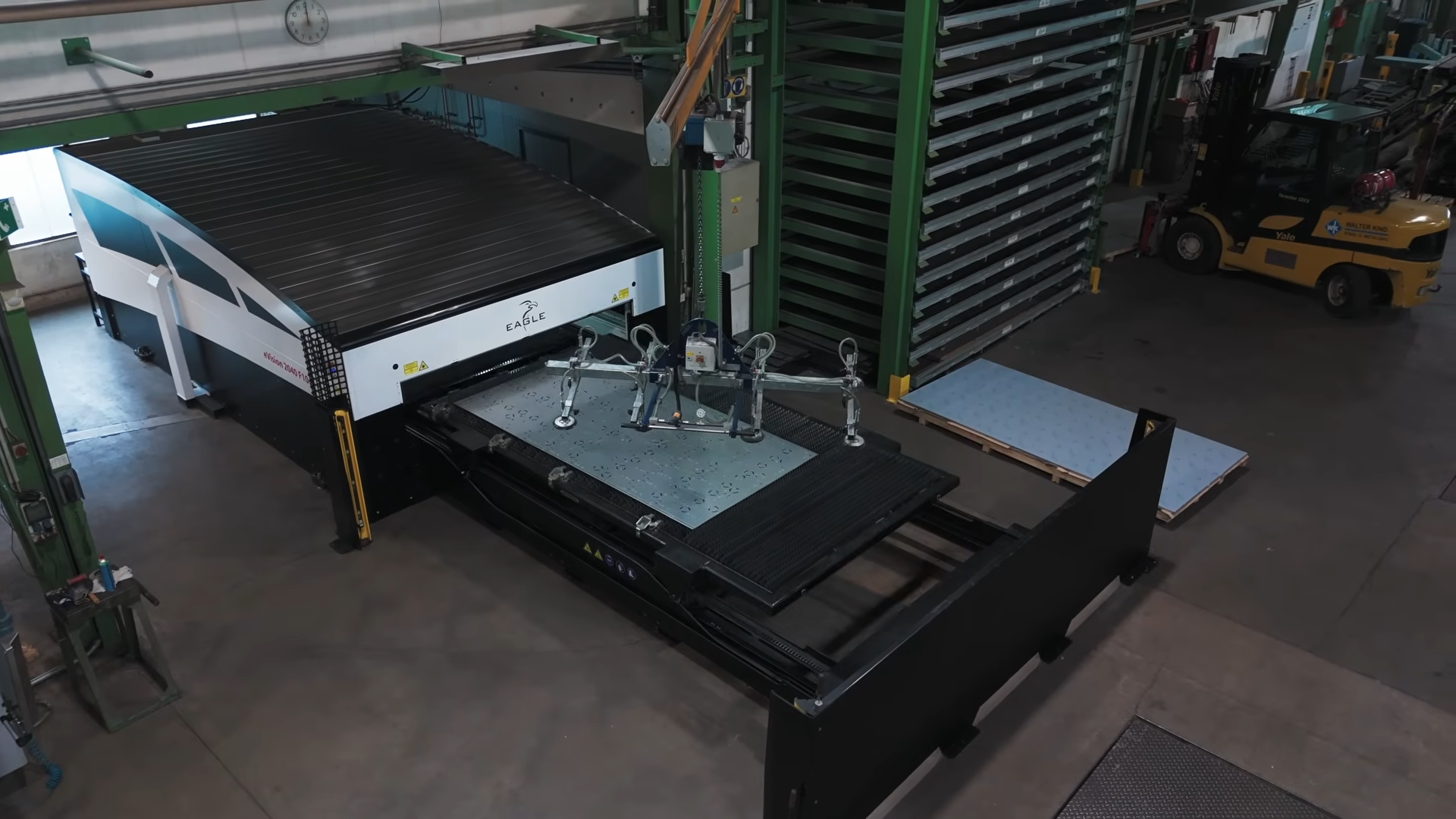
After the cut is finished, the next sheet still has to arrive. Parts have to be unloaded. Pallets may need to be exchanged. Scrap has to be removed. Consumables may need inspection or replacement. Operators may need to correct settings or restart a process.
As laser power rises, faster cutting shortens the time spent inside the nest, which means the time spent around the cutting process becomes a larger share of the total cycle. The cutting process may become faster without the production cell becoming proportionally more productive.
This is why cutting productivity cannot be separated from material flow, pallet-change time, loading, unloading, automation, and the organization of the production cell. The laser may be capable of more, but the surrounding process determines how much of that capability is actually used.
Research into industrial laser cutting supports this broader view of machine utilization. A study by researchers from Loughborough University and the University of Manchester separated laser operation into processing and several idle states, including job configuration, material changeover and waiting. It found that the energy and productivity of the system depend not only on cutting itself, but also on how often these other states occur and how long they last.
Small interruptions matter for the same reason. Replacing protective glass, checking a nozzle, cleaning a component, recalibrating the process, or solving a minor fault may take only a few minutes. The direct cost of a consumable is therefore only part of its economic impact. The other part is the production time lost when that consumable needs attention.
A machine that remains stable and productive for longer can complete more work using the same number of available hours. Another machine may have an equally powerful laser source and similar nominal speed, but if it requires more frequent intervention, its real output will be lower.
Manufacturing performance metrics already account for this distinction. NIST defines Overall Equipment Effectiveness as the combination of availability, performance and quality. In other words, machine effectiveness depends on how much scheduled time it actually runs, how quickly it operates while running, and how much of its output passes quality requirements.
Quality therefore cannot be separated from output either. Process stability influences piercing quality, edge quality, dimensional accuracy, and the amount of finishing required after cutting. An unstable process can increase scrap, recuts, troubleshooting, and operator involvement.
The relevant figure is not simply the number of parts cut. It is the number of acceptable parts produced.
A rejected part has still consumed material, cutting time, assist gas, electricity, and labor. A part that needs additional grinding or correction has also created extra downstream cost.

The same reasoning applies to energy.
Energy consumption is often compared per hour, but hourly demand alone does not describe production efficiency. If two machines consume similar amounts of electricity while one produces significantly more acceptable parts, that machine will have a lower energy cost per part.
The same can remain true even when the faster machine consumes more power per hour. Higher instantaneous demand does not automatically mean a higher production cost if substantially more work is completed during the same period.
The useful question is therefore not only how much energy the machine uses while running, but how much energy is required to produce one acceptable finished part.
This becomes more meaningful when the calculation also includes cooling, extraction, compressed air, assist gas, idle time, and other supporting systems. The industrial laser-cutting study cited above reached a similar conclusion: specific energy consumption depends on processing rate as well as the energy consumed in the system’s different operating states.
Once these factors are viewed together, the weakness of a simple kW comparison becomes clear.
Laser power influences what the machine can potentially do. Machine dynamics influence how quickly it can complete real geometry. Process stability and component design affect how long it can continue producing without intervention. Automation and material handling determine whether the laser spends its time cutting or waiting. Quality determines how much of the output is actually usable.
All of these factors eventually meet in the same place: cost per acceptable finished part.